Derek Ma, MSc
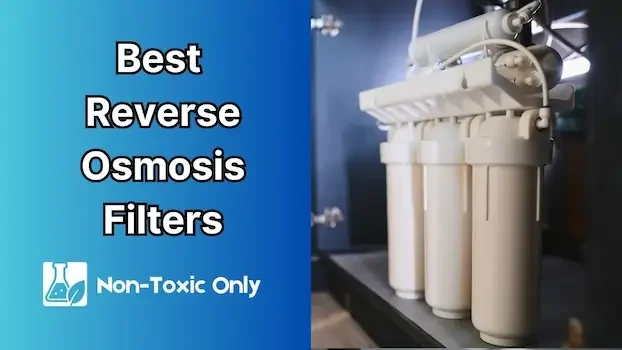
Reverse osmosis (RO) is one of the most effective ways to strip out a wide range of drinking water contaminants at home, including PFAS, heavy metals, microplastics, nitrates, and many disinfection by‑products.
As an environmental scientist who works in a public works laboratory, I perform testing on samples every day from an advanced water purification facility (AWPF) that relies on reverse osmosis.
Because my job is to confirm that RO‑treated water meets certain standards to be reused safely, I approach home RO water filters with the same critical mindset.
This guide breaks down how reverse osmosis works in simple terms, what certifications and features actually matter, and the best reverse osmosis water filters in 2026 for different living situations and budgets. These will include countertop systems, under-sink systems, whole house systems, and more.
How reverse osmosis water filters work explained in simple terms
Reverse Osmosis pushes tap water against a special plastic membrane that has pores so tiny that only water molecules can squeeze through, while most dissolved stuff (like microplastics, salts, heavy metals, PFAS, and many other contaminants) gets left behind on the other side.
The “clean” water that makes it through is your drinking water, and the concentrated leftover with all the rejected contaminants is sent down the drain as wastewater.
In-home systems, RO is combined with pre‑filters (sediment and carbon) and a post‑filter to remove particles, chlorine, and remineralize to improve taste before and after the membrane.
Considering the microplastics in bottled water, along with numerous other contaminants, reverse osmosis is one of the best ways to ensure the water you’re drinking is as clean as possible.
What to look for in a reverse osmosis water filter system
Choosing a RO water filter is less about brand name and more about what the filter is actually proven to do.
| Factor | Why it matters | What to look for |
| Certifications and test data | NSF/ANSI standards tell you a system has been independently tested, not just marketed with “up to 99%” | Prioritize NSF/ANSI 58 (reverse osmosis drinking water systems) because it verifies minimum TDS reduction and can include health‑based claims for arsenic, nitrate, and lead. NSF/ANSI 42 covers chlorine taste/odor, NSF/ANSI 53 covers health contaminants like lead, and NSF/ANSI 401/473 cover many “emerging” contaminants and PFAS. |
| Contaminant priorities (PFAS, lead, nitrates, etc.) | Different homes have different risks (PFAS, lead pipes, agricultural nitrates), so the “best” RO is the one tested for your specific issues. | If PFAS is a concern, look for testing or certification against PFAS‑related standards (NSF/ANSI 53/401/473). With older plumbing or known lead service lines, choose a system with specific lead‑reduction certification instead of vague “heavy metal” language. |
| System type (under‑sink vs countertop vs whole‑house) | Placement determines how much water you treat, how you use it, and how invasive installation is. | Under‑sink RO is the most common for drinking and cooking water: permanent, high‑capacity, and served through a dedicated faucet. Countertop RO sits on the counter, uses a reservoir or faucet adapter, and is ideal for renters or small spaces where you cannot modify plumbing. |
| Tankless vs traditional tank systems | Storage design affects water freshness, footprint, and cost. | Tankless RO uses high‑flow membranes (often 400–600 GPD) and internal pumps to provide strong flow directly, reducing stagnation and contamination risk in a storage tank. Traditional 4–5‑stage RO with a pressurized tank is usually cheaper and proven but takes more space and can hold stale water if not used regularly. |
| Waste‑water ratio and efficiency | RO always makes some waste water; how much matters for your bill and for drought‑prone regions. | Older systems may waste 3–4 L for every 1 L of purified water, while modern high‑efficiency or tankless units can be around 1:1 to 2:1 pure‑to‑drain. If you live where water is expensive or scarce, prioritize models that publish an efficiency ratio and consider designs with a permeate pump to cut waste. |
| Maintenance and filter replacement | Performance and safety depend on keeping pre‑filters and membranes in good shape. | Plan to replace sediment and carbon pre‑filters every 6–12 months, since neglecting them shortens membrane life and reduces chlorine protection. Expect RO membranes to last about 2–5 years depending on feed water quality and usage; systems with filter‑life indicators or TDS monitors make timing replacements much easier. |
You can learn more about what these various NSF/ANSI certifications mean in my water filter recommendation article: Best Water Filters of 2026.
A WQA Gold Seal means WQA tested and certified that product—often to those same NSF/ANSI standards—for structural integrity, material safety, and specific contaminant reduction claims.
Best Reverse Osmosis Water Filter Recommendations from a Scientist
Below are my top 4 best options, categorized by use case and focusing on both filtration and system type.
1. Best Reverse Osmosis Filter Overall: Waterdrop G5P700A Alkaline Mineral pH+ Reverse Osmosis Water Filter

Waterdrop is a tech‑forward RO brand that focuses on compact, high‑flow, tankless systems for modern kitchens. Its under‑sink G‑ and X‑series and A‑series countertop units combine multi‑stage RO filtration (often 7–8 stages) with smart features like TDS displays, filter‑life indicators, and slim designs that save under‑sink or counter space.
Contaminant Reductions and Certifications: NSF/ANSI 42, 53, 58, 372
Waste-water Ratio and Efficiency: Waterdrop emphasizes higher pure‑to‑drain ratios (often around 2:1 or 3:1)
Maintenance and Installation: straightforward installation and simple cartridge changes, especially on G3, G5, D6, and G‑series models.
Filter Replacement: Composite Filter: replace every 12 months; MRO Filter (Membrane + Reverse Osmosis Filter): replace every 24 months.
Remineralization: built‑in remineralization (like G5P500A and some X‑series)
Waterdrop RO Water Filter Models:
| Model line | Type & capacity | Key features | Best for |
| G2 / G2P600 | Under‑sink, tankless; G2P600 is ~600 GPD mid‑range. | Compact 2‑cartridge design with RO + carbon, tankless footprint, solid everyday contaminant reduction at a lower price point than G3‑series. | Budget‑friendly tankless RO for small–medium households that want strong filtration and faster flow than a classic tank system without paying G3‑series pricing. |
| G3P600 | Under‑sink, tankless ~600 GPD. | More stages than G2P600, smart faucet with TDS and filter‑life display, higher contaminant reduction performance, and additional certifications in many regions. | “Sweet spot” under‑sink system for most families who want a high‑performance tankless RO with good smart features and strong third‑party test data. |
| G3P800 | Under‑sink, tankless 800 GPD. | Higher flow (800 GPD), 3:1 pure‑to‑drain ratio, UV sterilization, multi‑stage filtration with seven‑layer RO membrane, and smart display faucet. | Larger households or heavy water users who want very fast fills, better efficiency, and built‑in UV as an extra microbial safety layer. |
| G5 / G5P500A | Under‑sink, tankless ~500 GPD. | Compact footprint with 8‑stage filtration, NSF/ANSI 58 & 372 certifications, 2:1 pure‑to‑drain ratio, and alkaline remineralization (G5P500A) to raise pH and improve taste. | Small–medium homes that want a space‑saving RO with mineralized, better‑tasting water and good efficiency at a moderate price point. |
| X‑series (X8, X12, X16) | Under‑sink, tankless 600–1600+ GPD depending on model. | High‑end multi‑stage systems with very high flow rates, advanced smart monitoring, and more stages (up to 11) including remineralization and extra polishing. | High‑demand households or premium kitchens that prioritize maximum flow, top‑tier performance, and the most advanced feature set (oversized for most small homes). |
| A1 / A2 countertop | Countertop RO with internal tank; no plumbing. | Plug‑in countertop units with multi‑stage RO, hot/cold dispensing (A1), UV sterilization, and smart displays; A1 is higher‑performance and higher‑priced, A2 is more budget‑friendly. | Renters, offices, or small spaces that want RO without drilling or under‑sink work; A1 for maximum features, A2 for a simpler, cheaper option. |
2. Best Reverse Osmosis Countertop System: AquaTru Carafe Countertop Water Purifier

AquaTru is a countertop‑first RO brand built around plug‑in, no‑plumbing systems that are heavily backed by third‑party testing and certifications. Its Classic and Carafe models use patented 4‑stage Ultra Reverse Osmosis technology.
AquaTru leans into ease of use—freestanding designs, front‑loading tanks, long‑lasting filters (often 600–1200 gallons), and clear filter‑change indicators—making it especially appealing to renters and households that want serious contaminant reduction and strong certification credentials without drilling into cabinets or hiring a plumber.
Contaminant Reductions and Certifications: IAPMO‑certified to NSF/ANSI standards and marketed as reducing over 80 contaminants.
Wastewater Ratio and Efficiency: Not specified, but the system recirculates water during filtration to minimize waste.
Maintenance and Installation: Empty and rinse the intake tank after each filtering cycle to remove wastewater. No installation required.
Filter Replacement: Filters last 6 months to 2 years.
Remineralization: Post-carbon filter that adds back beneficial minerals for taste and health. Results in clean water with a balanced mineral profile rather than “dead” distilled water
3. Best Reverse Osmosis System Under Sink: APEC Water Systems ROES-PH75 Essence Series
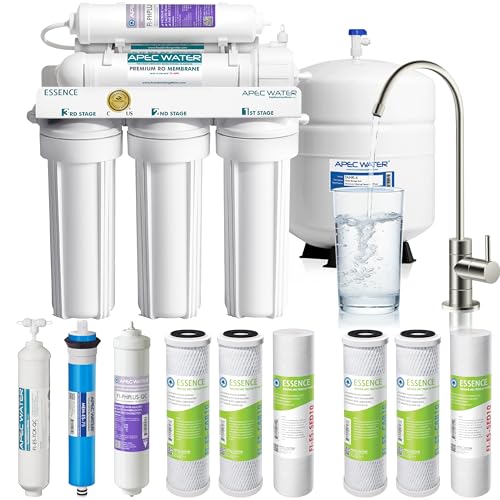
APEC’s tank‑based under‑sink reverse osmosis system is designed for people who want proven, long‑term reliability.
This 6‑stage, 75 GPD system combines sediment and dual carbon block pre‑filters, a high‑rejection thin‑film RO membrane, a polishing carbon stage, and a final calcite cartridge that adds food‑grade calcium carbonate to gently raise pH and improve taste for those who prefer more alkaline water.
The system uses standard‑size housings and block filters, is designed and engineered in the USA, and is built for straightforward DIY installation and long filter life, making it a solid “set it and forget it” option if you are comfortable with a traditional RO + tank layout under the sink.
Contaminant Reductions and Certifications: WQA certified
Wastewater Ratio and Efficiency: 3:1 water efficiency ratio
Maintenance and Installation: Straightforward installation (typically completed in 1 – 3 hours)
Filter Replacement: Pre-filters (stages 1-3): Replace every 6-12 months; RO membrane (stage 4): Replace every 12-24 months; Post-filters (stages 5-6): Replace every 12-24 months
Remineralization: includes a special calcium carbonate filter (6th stage) that remineralizes the water by adding back calcium minerals.
4. Best Reverse Osmosis System with Remineralization: iSpring RCC7AK, NSF Certified, 75 GPD, Alkaline 6-Stage Reverse Osmosis System

iSpring is a value‑driven RO brand known for traditional under‑sink systems with strong certifications and straightforward DIY installation. The popular RCC7 and RCC7AK systems use 5‑ or 6‑stage filtration with a 0.0001‑micron RO membrane plus sediment and carbon stages to remove up to 99% of over 1,000 contaminants.
Contaminant Reductions and Certifications: NSF/ANSI 58 Certified and Water Quality Association (WQA) Gold Seal Certified
Waste-water ratio and efficiency: has a 3:1 to 4:1 water waste ratio
Maintenance and Installation: Straightforward installation
Filter replacement: Pre-filters (stages 1-3): Every 6-12 months; RO membrane (stage 4): Every 2-3 years; Alkaline and carbon filters (stages 5-6): Every 12 months
Remineralization: The RCC7AK adds an alkaline remineralization stage that restores calcium and magnesium (about 30–60 mg/L)
FAQ
What does a reverse osmosis (RO) filter actually remove?
RO membranes reject most dissolved salts, heavy metals, PFAS, nitrates/nitrites, fluoride, and a wide range of small organic contaminants when properly pre‑filtered. Most home systems also include carbon stages that handle chlorine, taste/odor, and many VOCs.
Is RO water safe to drink every day?
Yes—point‑of‑use RO systems certified to NSF/ANSI standards are considered safe for daily use and are widely used for drinking and cooking. They do remove beneficial minerals along with contaminants, but those minerals are a tiny fraction of daily intake compared with food.
Do I need remineralization or “alkaline” RO water?
Remineralization cartridges add back calcium and magnesium to improve taste and slightly raise pH; many people prefer this for flavor and to reduce corrosiveness. It is optional from a health perspective, but useful if you dislike the “flat” taste of very low‑TDS water.
How often should RO filters and the membrane be replaced?
Most guides recommend changing sediment and carbon pre‑filters every 6–12 months and the RO membrane every 2–5 years, depending on water quality and usage. Some systems include TDS or filter‑life indicators that help time replacements.
Can RO remove PFAS (“forever chemicals”)?
Reverse Osmosis is one of the most effective household technologies for PFAS in drinking water, but not every unit is tested for them. Look for NSF/ANSI 53/401/473 listings or manufacturer PFAS lab data rather than assuming all RO systems handle PFAS equally.
Read Next
Top 5 Best Water Filter Pitchers

The Best Water Filters of 2026 (from a Scientist)
The Truth About Microplastics in Bottled Water
Top 5 Best Gravity Fed Water Filter Systems
Top 5 Best Filtered Water Bottles
Top 10 Best Non Toxic Laundry Detergents

Top 5 Best Non Toxic Hand Soaps

Top 7 Best Non Toxic Body Washes


Top 10 Best Non Toxic Cutting Boards

Top 5 Best Non Toxic Dishwashing Detergents
Top 5 Best Stainless Steel Baking Sheets

What is FD&C Red 40 Made of and its Side Effects?
What Is Yellow 5 (Tartrazine) and is it Bad for You?
What Is FD&C Blue 1 and is it Bad for You?
What are Parabens & Why are They Bad? From a Scientist

PFAS: Meaning, Definition, and How to Avoid
What are Phthalates? Pronunciation and Definition

What is Fragrance Made of? Ingredients List & Health Risks