Derek Ma, MSc
When I realized my parents have been using Finish dishwashing pods for years, I didn’t think much of it, until I looked it up and saw a high‑concern rating on EWG.
Suddenly, it wasn’t just some abstract “toxic ingredients” issue on a label; it was about the detergent sitting under my parents’ sink.
Because of my background in toxicology and environmental laboratory work, I recognized a lot of the ingredients EWG was flagging in that Finish formula.
I monitor for some of those same compounds, where they show up as contaminants we’re trying to track and reduce.
Knowing they were also in a product my parents use every day sent me down the rabbit hole of what’s actually in mainstream dishwashing products, why they get flagged, and how to find options that still clean well without quietly adding to our everyday chemical exposure.
Key Ingredients to Avoid in Dishwashing Tablets and Pods
The Environmental Working Group (EWG) evaluated 326 dish soaps and assigned each one a hazard rating ranging from A to F, A being the safest, F being the most toxic.
About 65% got a D or an F, including many of the big conventional dish soap brands you might be familiar with.
EWG gave popular brands like Dawn, Cascade, and Finish a score of D or F mainly because of specific ingredients and hazard flags.
When you’re scanning a label—whether in the grocery aisle or on Amazon—watch for these red flags:
| Ingredient (what you’ll see on label) | Why people avoid it (health / environment) |
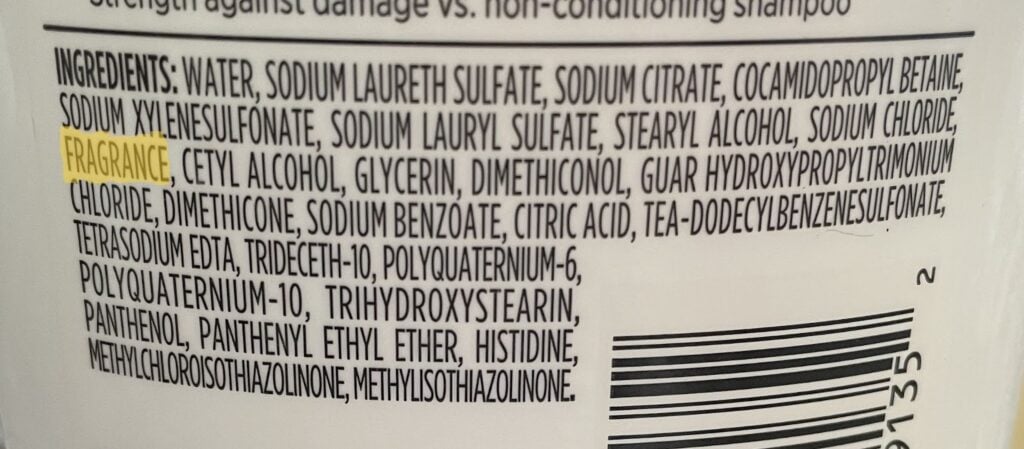
| Sodium laureth sulfate (SLES), other “‑eth” surfactants, PEGs | Ethoxylated; can be contaminated with 1,4‑dioxane, a probable carcinogen; also irritating to skin. |
| Triclosan (antibacterial) | Endocrine‑disrupting potential, contributes to antibiotic resistance, aquatic toxicity; unnecessary in soap. |
| “Fragrance” / “parfum” (undisclosed) | Can hide phthalates and multiple allergens; linked to hormone disruption, headaches, asthma, skin issues. |
| Phthalates (often hidden in fragrance) | Known endocrine disruptors associated with reproductive and developmental effects. |
| Formaldehyde & formaldehyde‑releasing preservatives (e.g., DMDM hydantoin, quaternium‑15, bronopol) | Known human carcinogen and strong respiratory/skin irritant, slowly released over time. |
| Methylisothiazolinone / methylchloroisothiazolinone (MI/MCI) | Potent sensitizers; major cause of allergic contact dermatitis, especially with frequent use. |
| DEA/MEA/TEA (ethanolamines; e.g., cocamide DEA) | Can form nitrosamines (some carcinogenic) and are flagged for organ and endocrine concerns. |
| Phosphates / phosphonates | Drive water pollution and algal blooms (eutrophication); unnecessary in most modern dish formulas. |
| Chlorine / chlorine‑releasing agents | Strong respiratory irritants; can form harmful fumes when mixed with other cleaners. |
| Synthetic dyes/colorants (FD&C Blue, Yellow‑5, etc.) | Additive exposure without cleaning benefit; some linked to irritation and potential carcinogenicity. |
If you want more in‑depth information on some of these ingredients, check out my articles on fragrance, dyes, and phthalates.
What I Look For in a Non-Toxic Dishwashing Tablets and Pods
When I call a dishwashing soap “non‑toxic,” I’m not just reacting to marketing claims—I’m looking at the ingredient list through a toxicology and wastewater‑laboratory lens.
1. Transparent, simple ingredients
- Short ingredient list you can actually read and research.
- Full disclosure on the brand’s website, including preservatives and fragrance components.
2. No undisclosed fragrance or obvious endocrine disruptors
- Fragrance‑free or clearly listed essential oils only (no vague “fragrance/parfum”).
- Avoids phthalates, benzotriazole, and other ingredients flagged as potential endocrine disruptors.
3. Gentler surfactants and no ethoxylates where possible
- Prefers plant‑based glucosides and other milder surfactants.
- Minimizes or avoids SLES and other “‑eth” ingredients that can carry 1,4‑dioxane contamination.
4. Safer preservatives and no formaldehyde donors
- No methylisothiazolinone (MI), methylchloroisothiazolinone (MCI), or formaldehyde‑releasing preservatives.
- Uses lower‑concern preservatives at low levels, ideally with good safety data.
5. No unnecessary dyes or optical brighteners
- Skips synthetic colorants and brighteners that add exposure but don’t improve cleaning performance.
6. Credible third‑party certifications
- Bonus points for labels like EPA Safer Choice, EWG VERIFIED, MADE SAFE, Ecocert/ECOLOGO, or USDA Biobased that at least screen for higher‑hazard ingredients.
7. Reasonable performance
- Actually cuts grease and rinses clean in real‑world use (no heavy residue).
- High Amazon ratings and strong performance reviews
| Certification / label | What it means for dish soap | Why it’s useful for “non‑toxic” seekers |
| EPA Safer Choice | EPA reviews every ingredient (surfactants, preservatives, solvents, fragrances) against strict human and environmental safety criteria; product must still clean effectively. | Strong signal that the whole formula avoids higher‑hazard chemicals and meets performance standards. |
| EWG VERIFIED (Cleaning) | Must avoid EWG “chemicals of concern,” fully disclose ingredients (including key fragrance components), and meet EWG’s health standards. | Helps you quickly find products with full transparency and without EWG‑flagged high‑concern ingredients. |
| MADE SAFE | Screens all reported ingredients against a long “avoid” list (carcinogens, endocrine disruptors, reproductive toxins, etc.). No known or suspected toxicants allowed. | One of the most stringent “non‑toxic” labels; good shorthand for very conservative ingredient screening. |
| Ecocert / Ecocert Detergents | Requires a minimum share of natural/renewable ingredients, bans or limits certain petrochemical surfactants, and emphasizes biodegradability. | Adds assurance on both ingredient origin and environmental profile (biodegradability, fewer synthetics). |
| USDA Certified Biobased | Specifies what percentage of the product’s carbon content comes from renewable biological sources. | Helps identify more plant‑based formulas, though it doesn’t independently guarantee low toxicity. |
| Leaping Bunny / Cruelty‑Free | Verifies no animal testing at any stage of product development. | Not a tox standard, but often found on brands that also prioritize cleaner, more ethical formulations. |
My Top 5 Best Non Toxic Dishwashing Tablets and Pods Recommendations
1. BLUELAND 100% Plastic-Free Dishwasher Detergent Tablets, 120 Count, Free & Clear, Eco-Friendly Dishwashing Pods, Natural, USDA Certified biobased
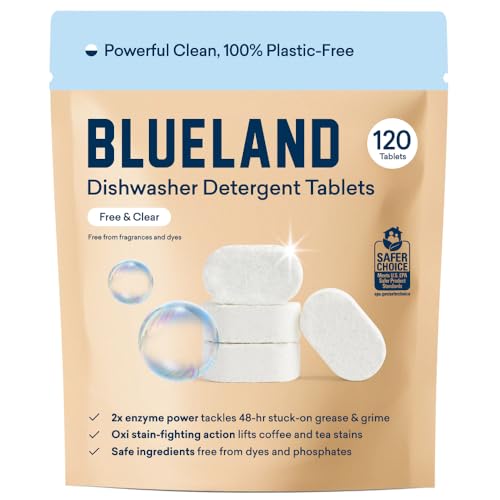
These Blueland 100% plastic-free dishwasher tablets use plant- and mineral-based ingredients with dual enzymes and oxi power to cut through 48‑hour baked‑on food and tackle coffee, tea, and wine stains, all in a fragrance-free, microplastic-free, septic-safe formula that’s EPA Safer Choice, Leaping Bunny, vegan, B Corp, Climate Neutral, and USDA Biobased certified.
- Amazon Rating: 4.3 out of 5.0 (9,090 ratings)
- Third‑party Certifications: EWG Verified, EPA Safer Choice, USDA Bio-Preferred, and Leaping Bunny
- No synthetic fragrance: ✅
- No dyes or optical brighteners: ✅
- Safe Preservatives: ✅
- Plastic Free: ✅
2. Branch Basics Dishwasher Tablets – 40 Ct, 3 Pack | Plastic-Free, Fragrance-Free, Human-Safe | Delivers a Powerful Clean Without Harsh Chemicals

Branch Basics Dishwasher Tablets are a great low‑tox pick if you want clean dishes without plastic film or harsh ingredients.
These plant‑ and mineral‑based tabs are fragrance‑free (no essential oils), PVA‑free, and free from sulfates, chlorine, phosphates, and phthalates, yet still cut through grease and rinse clear without leaving residue.
- Amazon Rating: 4.7 out of 5.0 (161 ratings)
- Third‑party Certifications: EWG Verified, MadeSafe Certified, and Leaping Bunny
- No synthetic fragrance: ✅
- No dyes or optical brighteners: ✅
- Safe Preservatives: ✅
- Plastic Free: ✅
3. Unscented Dishwasher Pods by AspenClean, Dye-Free, Zero Plastic, EWG Verified™, Vegan, Eco-Friendly, Natural Dishwasher Detergent – 28 Count
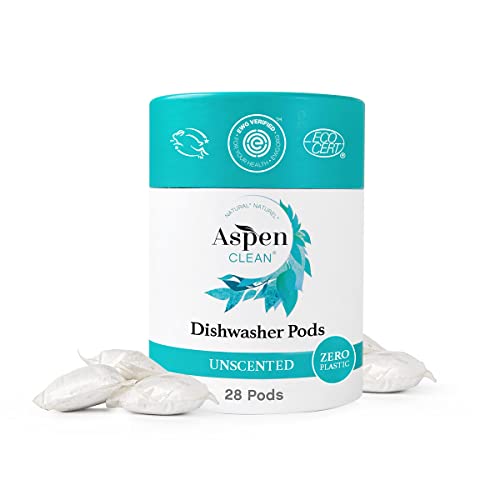
AspenClean Unscented Dishwasher Pods are a strong pick if you want EWG VERIFIED and eco‑certified pods that actually clean well.
These plant‑ and mineral‑based tablets are fragrance‑free, dye‑free, and packaged in zero‑plastic, compostable cardboard; the formula skips phosphates, chlorine, SLS/SLES, ethoxylates, synthetic fragrance, and preservatives, relying instead on oxygen bleach, enzymes, and chicory‑root–derived ingredients to cut grease and prevent film.
- Amazon Rating: 4.1 out of 5.0 (521 ratings)
- Third‑party Certifications: EWG Verified, EcoCert Certified, and Leaping Bunny
- No synthetic fragrance: ✅
- No dyes or optical brighteners: ✅
- Safe Preservatives: ✅ Uses Sodium Benzoate and Potassium Sorbate as natural preservatives (Low hazard – EWG)
- Plastic Free: ✅
4. Dish Washing Machine Tablets, Pack of 40 – Fragrance-Free, PVA-Free, Non-Toxic Dishwasher Tablets in Compostable Packaging – Women-Owned Company, Leaping Bunny Certified

Sparkling dishes, zero plastic: these fragrance-free Green Llama dishwasher tablets deliver a powerful, residue-free clean without PVA, phosphates, chlorine, dyes, parabens, or phthalates, making them a safer choice for sensitive households.
Each pre-measured tab comes in fully compostable, plastic-free packaging, so you can cut kitchen waste while supporting a women-owned, Leaping Bunny certified brand committed to non-toxic, cruelty-free cleaning.
- Amazon Rating: 4.4 out of 5.0 (61 ratings)
- Third‑party Certifications: EWG Verified and Leaping Bunny
- No synthetic fragrance: ✅
- No dyes or optical brighteners: ✅
- Safe Preservatives: ✅
- Plastic Free: ✅
5. Molly’s Suds Dishwasher Pods | Clean Dishwasher Detergent, Cuts Grease & Rinses Clean (Residue-Free) for Sparkling Dishes | 60 Auto-Release Tabs (Unscented)

Sparkling, residue-free dishes without harsh chemicals. Molly’s Suds Unscented Dishwasher Pods use plant-based surfactants and bio-based enzymes to cut grease, tackle stuck-on food, and rinse completely clean—no film, no synthetic fragrance, no dyes, and no phosphates.
These auto-release tabs are packaged in water-soluble film, are septic-safe and cruelty-free, and are a great fit for health-conscious households that want powerful cleaning with a simpler, more transparent ingredient list.
- Amazon Rating: 4.4 out of 5.0 (7,878 ratings)
- Third‑party Certifications: EPA Safer Choice and Leaping Bunny
- No synthetic fragrance: ✅
- No dyes or optical brighteners: ✅
- Safe Preservatives: ✅
- Plastic Free: The pods are wrapped in a biodegradable PVOH-based film, which is technically a form of plastic (EPA approved)
Pros and Cons of Dishwashing Tablets / Pods
Pros
- Strong, consistent cleaning; lab tests often rank pods/tablets at the top, outperforming gels and many powders.
- Very convenient and mess‑free: pre-measured dose, easy to store and use.
- Many are “all‑in‑one” (built-in rinse aid, enzymes, sometimes water softening).
Cons
- Highest cost per wash compared with powder or liquid.
- Dose cannot be reduced for small or lightly soiled loads.
- Some tablets may not fully dissolve on short/eco cycles, leaving residue.
FAQ
What are dishwashing tablets?
Dishwashing tablets (or “tabs/pods”) are pre-measured blocks of concentrated detergent that you place in your dishwasher’s detergent compartment. They typically combine surfactants, enzymes, water softeners, and sometimes rinse aid in one dose for convenient, consistent cleaning.
How do dishwashing tablets work?
When the machine reaches the wash phase, the dispenser door opens and the tablet dissolves in water, releasing cleaning agents that break down grease, starches, and proteins. Enzymes target food residues, builders tackle hard water minerals, and surfactants lift soils so they can be rinsed away.
Do pods work in cold water?
Most modern laundry pods are formulated to dissolve in cold, warm, or hot water, but incomplete dissolution can still happen in very cold cycles or overloaded machines. Non toxic brands often recommend using at least cool or warm settings for heavy soil or very hard water, and ensuring the drum is not overstuffed.
Read Next
Top 5 Best Non Toxic Dishwashing Detergents
Top 10 Best Non Toxic Laundry Detergents
Top 5 Best Non Toxic Dishwashing Powder Detergent
Top 5 Best Water Filter Pitchers

The Best Water Filters of 2026 (from a Scientist)
Top 10 Best Non Toxic Cutting Boards
Top 5 Best Non Toxic Hand Soaps
Top 7 Best Non Toxic Body Washes
Top 5 Best Filtered Water Bottles
What is FD&C Red 40 Made of and its Side Effects?
What Is Yellow 5 (Tartrazine) and is it Bad for You?
What Is FD&C Blue 1 and is it Bad for You?
What are Parabens & Why are They Bad? From a Scientist
PFAS: Meaning, Definition, and How to Avoid
What are Phthalates? Pronunciation and Definition

What is Fragrance Made of? Ingredients List & Health Risks