Derek Ma, MSc
I’ve always leaned toward non‑toxic pods, tablets, and liquid dish soap, so powder wasn’t my first choice.
But when family and friends started asking for non‑toxic powder recommendations because they love the lower cost per load and customizable dosing, I tapped into my environmental science and lab background to vet the options.
In this guide, I’ll break down which ingredients to avoid, how to read labels, and my top 5 best non‑toxic powder detergents that actually clean.
Key Ingredients to Avoid in Dishwashing Powder Detergent
The Environmental Working Group (EWG) has reviewed hundreds of dishwashing products and rates them on an A–F scale, with A indicating the lowest overall hazard and F the highest.
Alarmingly, a large share of conventional formulas land in the D–F range, including several well‑known brands such as Dawn, Cascade, and Finish, largely because of specific concerning ingredients and hazard flags.
So when you’re checking labels for a non-toxic dishwashing powder, it’s worth pausing to look for those red‑flag ingredients before you buy.
| Ingredient to avoid (label name) | Why people avoid it (health / environment) | Non‑toxic / cleaner alternative and why it’s better |
| Sodium laureth sulfate (SLES), other “‑eth” surfactants, PEGs ❌ | Ethoxylated; can be contaminated with 1,4‑dioxane, a probable carcinogen, and can irritate skin and eyes. | Non‑ethoxylated surfactants (e.g., alkyl polyglucosides) that are plant‑derived, readily biodegradable, and free of 1,4‑dioxane contamination. |
| Triclosan (antibacterial) ❌ | Suspected endocrine disruptor and is toxic to aquatic organisms; not needed for routine dishwashing. | Regular detergents plus hot water and mechanical action; oxygen bleach and enzymes for extra hygiene without persistent antibacterial agents. |
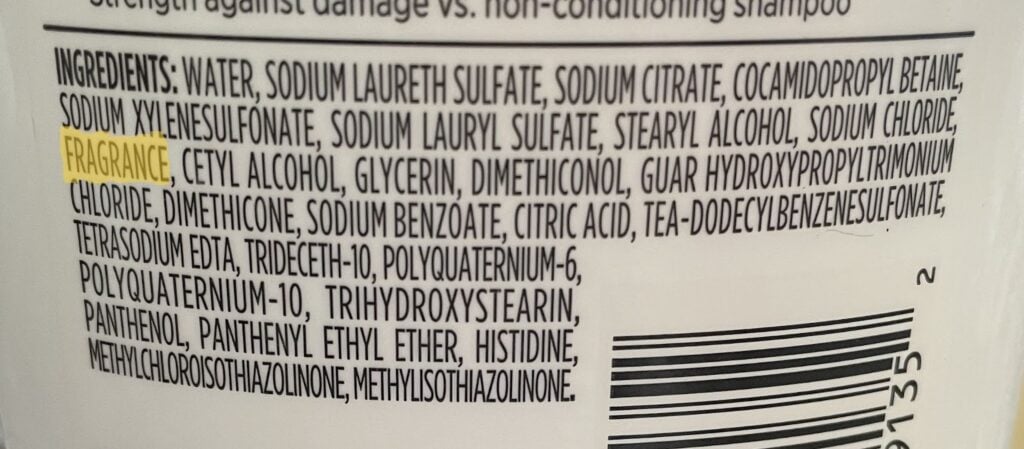
| “Fragrance” / “parfum” (undisclosed) ❌ | Umbrella term that can hide phthalates and dozens of allergens; linked to headaches, asthma, hormone disruption, and skin irritation. | Fragrance‑free formulas, or products scented only with clearly disclosed essential oils in low concentrations, reducing unknown chemical exposure. |
| Phthalates (often hidden in fragrance) ❌ | Well‑known endocrine disruptors tied to reproductive and developmental effects and possible metabolic issues. | Completely phthalate‑free products; again, fragrance‑free or transparently scented formulas that explicitly state “phthalate‑free.” |
| Formaldehyde & formaldehyde‑releasers (DMDM hydantoin, quaternium‑15, bronopol) ❌ | Formaldehyde is a known human carcinogen and a strong skin and respiratory irritant; “releasers” slowly emit it over time. | Preservative systems that avoid formaldehyde entirely (e.g., sodium benzoate, potassium sorbate, or no added preservative in dry powders). |
| Methylisothiazolinone / methylchloroisothiazolinone (MI/MCI) ❌ | Potent sensitizers and a leading cause of allergic contact dermatitis, especially with frequent use and chronic exposure. | Formulas preserved without isothiazolinones, relying on dry powder format or milder preservatives with lower sensitization profiles. |
| DEA/MEA/TEA (ethanolamines; e.g., cocamide DEA) ❌ | Can form nitrosamines (some carcinogenic) and are flagged for organ and endocrine concerns. | Ethanolamine‑free products that use simpler surfactant systems and pH adjusters without nitrosamine formation risk. |
| Phosphates / phosphonates | Major driver of water pollution and algal blooms (eutrophication), which harm aquatic ecosystems; largely unnecessary in modern formulas. | Phosphate‑free builders such as sodium citrate, sodium carbonate, and other biodegradable chelators that soften water with far less ecological impact. |
| Chlorine / chlorine‑releasing agents ❌ | Strong irritants for eyes, skin, and lungs; can contribute to harmful fumes and disinfection byproducts. | Oxygen‑based bleaches like sodium percarbonate that break down into washing soda and oxygen, offering stain removal without chlorine gas. |
| Synthetic dyes/colorants (FD&C Blue, Yellow‑5, etc.) ❌ | Purely cosmetic; some are linked to allergies, hyperactivity, or possible carcinogenicity, and they add unnecessary chemical load. | Dye‑free formulations that focus on performance instead of color, reducing avoidable exposure—especially important for sensitive users and kids. |
If you want more in‑depth information on some of these ingredients, check out my articles on fragrance, dyes, and phthalates.
Conventional Product Example (EWG – Hazard Score F ❌) FINISH Automatic Dishwasher Detergent Powder, Lemon
Many popular dishwasher detergents, like Finish Automatic Dishwasher Detergent Powder (Lemon), clean dishes effectively but come with a trade‑off, questionable synthetic ingredients that lower their safety ratings.
Finish Dishwashing Powder Ingredients:
- Sodium sulfate, sodium carbonate, sodium citrate – ✅ Mineral salts and builders that soften water and help cleaning; generally low‑concern in EWG’s framework for rinse‑off cleaners.
- Sodium silicate – ✅ Alkaline builder/anti‑corrosion agent used in many detergents; not a top EWG red flag, though it’s more functional than “natural.”
- Sodium percarbonate – ✅ Oxygen bleach that breaks down into washing soda and hydrogen peroxide; commonly used in higher‑rated “safer” products.
- Alcohols ethoxylate (alkoxylated alcohol surfactants) – ⚠️ This is a broad family that can include ethoxylated surfactants contaminated with 1,4‑dioxane. EWG often gives mid‑to‑poor scores to generic “alcohols ethoxylate” because the label doesn’t clarify how clean or which specific type is used.
- Polyacrylic acid – ❌ A synthetic polymer used as an anti‑spot/anti‑redeposition agent; not the worst offender but raises persistence/microplastic questions and doesn’t align with “minimal, biodegradable ingredients.”
- Fragrance – ❌ “Fragrance” is an undisclosed mixture that can include phthalates and multiple allergens; EWG routinely penalizes products for generic fragrance because of links to hormone disruption, headaches, asthma, and skin reactions.
- Sodium bisulfite – ❌ A preservative and processing aid that can trigger sensitivity for some people and contributes to the overall hazard score when combined with other concerns.
- Colorants (synthetic dyes) – ❌ Added only for appearance; provide no cleaning benefit and add extra chemicals. EWG often rates as unnecessary or moderately concerning.
- Sodium hypochlorite – ❌ The active chemical in chlorine bleach. EWG often scores this ingredient in the C–F range depending on the product and concentration, mainly because of its corrosive nature and respiratory concerns.
How I Chose The Five Best Non Toxic Dishwashing Powders
- Ingredient safety (EWG‑style scoring, no high EWG hazard concern).
- Performance (enzymes + builders that can actually handle baked‑on food).
- I also prioritized powders that are consistently highly rated on Amazon, so you’re not just getting a clean ingredient list on paper, you’re getting formulas that real people say actually work load after load.
My Top 5 Best Non-Toxic Dishwashing Powder Detergents Recommendations
1. Dirty Labs | Dishwasher Detergent and Booster | Scent Free | 48 Loads (1 lb) | Ultra Clean, Spot Free, Quick Wash Optimized | Hyper Concentrated

Dirty Labs’ 2‑in‑1 Bio Enzyme Dishwasher Detergent + Booster (Scent Free) is an ultra‑concentrated powder designed to act as both the main detergent and a built‑in booster, so you only need one product per load.
The formula uses mineral and bio‑based ingredients like sodium citrate, sodium carbonate, sodium percarbonate, and advanced enzymes to tackle stuck‑on food, while avoiding SLS/SLES, dyes, parabens, 1,4‑dioxane, phthalates, and other endocrine‑disrupting or Prop 65‑listed chemicals.
Amazon Rating: 4.4 out of 5.0 stars (2,502 ratings)
Ingredient Lists/Notes:
- Sodium carboxymethyl inulin – ✅ A biobased water softener and detergent booster explicitly listed by some brands with EWG ingredient ratings as a low‑concern builder.
- Sodium citrate, sodium carbonate, sodium carbonate peroxide, sodium gluconate – ✅ Common mineral builders/chelators and oxygen bleach; all show up in many EWG‑friendly formulas, with sodium citrate and sodium gluconate specifically noted as very low‑concern.
- Protease (Subtilisin) and alpha‑amylase enzymes – ✅ Standard detergent enzymes used in many higher‑rated dish and laundry products; allowed in EWG‑conscious formulas.
- Sorbitan caprylate – ✅ Used as a co‑surfactant/preservative booster in “green” products; not on major red‑flag lists and compatible with low‑toxicity formulations.
- Hydrous sodium silicate powder, calcium silicate, silicon dioxide – ✅ Inorganic anti‑corrosion, anti‑caking, and flow agents that are widely used and not considered high‑hazard by EWG.
2. The Clean People Dishwasher Detergent Powder | Cuts Grease and Rinses Sparkling Clean | Residue-Free (30 Ounce, Lemon Verbena)
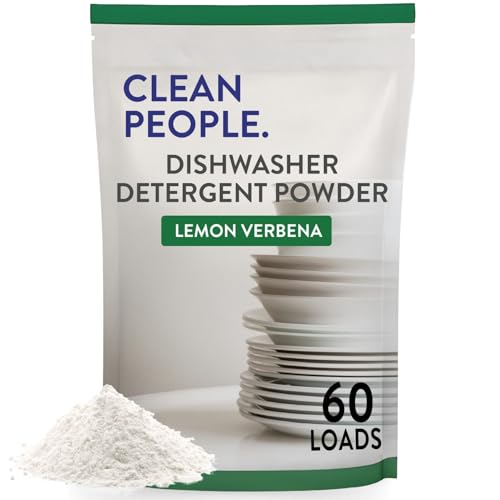
The Clean People Dishwasher Detergent Powder is a plant‑based, enzyme‑boosted powder designed to cut through grease and stuck on food while rinsing clean without residue or film.
It’s marketed as free from phosphates, dyes, phthalates, chlorine, and ethoxylates, relying instead on biodegradable ingredients to deliver sparkling dishes in both hard and soft water.
Amazon Rating: 4.4 out of 5.0 (128 ratings)
Ingredient List/Notes:
- Protease and amylase enzymes – ✅ Standard in high‑performing detergents; EWG generally allows them.
- Sodium carbonate – ✅ Rated very low hazard (EWG score 1) when used properly; can irritate eyes/skin in concentrated form but is generally regarded as safe in cleaners.
- Sodium sulfate – ✅ Common inert “filler” salt; typically low concern in EWG’s framework for cleaning products.
- Sodium metasilicate – ✅ Very alkaline and caustic; EWG flags it as capable of causing severe skin burns, eye damage, and respiratory irritation, so they restrict or prohibit it in some EWG‑Verified categories and limit levels in others.
- Alkyl polyglucoside – ✅ Non‑ethoxylated, plant‑derived surfactant family; widely used in EWG‑friendly and EWG‑Verified products and generally scored low hazard.
- Sodium citrate dihydrate – ✅ Biodegradable water softener/chelator; considered low hazard and compatible with EWG‑Verified formulations.
- Sodium percarbonate – ✅ Oxygen bleach that breaks down to washing soda and hydrogen peroxide; usually treated as low–moderate hazard mainly for eye/skin irritation in concentrate, acceptable in many “safer” formulas.
- TAED (tetraacetylethylenediamine) – ✅ Bleach activator; shows up in some “safer” oxygen‑based products and is not on EWG’s core “unacceptable” list, though it won’t be as “clean” as basic minerals.
- Itaconic acid, sodium salt – ✅ Biobased chelating/builder type; not a prominent EWG concern and used in some greener products.
- Natural lemon verbena fragrance – ⚠️Essential‑oil‑based fragrance can still be a sensitizer, more cautionary than fragrance‑free.
3. Truly Free Dishwasher Detergent Powder | Natural Dish Detergent, Dishwasher Soap | Plastic Free, Plant-Based, Clean, Heavy Duty Hard Water Stain & Grease Remover | Fragrance Free | 12.5 oz (Pack of 1)

Truly Free Dishwasher Detergent Powder is a fragrance‑free, plant‑ and mineral‑based powder designed to tackle grease and hard‑water residue without phosphates, chlorine bleach, dyes, or nonylphenol ethoxylates.
It comes in plastic‑free, scoopable packaging and uses enzymes plus anti‑spotting agents to leave dishes clear and residue free, making it a strong fit for a non‑toxic, low‑waste dishwashing routine.
Amazon Rating: 4.7 stars out of 5.0 (1,280 ratings)
Ingredients:
- Acrylic Acid Homopolymer – ✅ Used as an anti‑redeposition/anti‑film polymer; listed by Truly Free with a low EWG score (around 1–2) and not on major EWG “avoid” lists.
- Amylase, Protease – ✅ Standard detergent enzymes; allowed in many A/B‑rated products.
- Alkoxylated Alcohol – ⚠️ This is a broad class; some alcohol ethoxylates are flagged because ethoxylation can introduce 1,4‑dioxane. Safer brands usually specify that their alkoxylated alcohols are 1,4‑dioxane‑free and not based on nonylphenol.
- TAED – ✅ A bleach activator used with oxygen bleach; shows up in “safer” detergents and is not on EWG’s main high‑concern lists.
- Sodium sulfate, sodium percarbonate, sodium carbonate, sodium citrate – ✅ Common mineral builders/salts/oxygen bleach widely used in EWG‑friendly formulas with low concern ratings.
- Sodium carboxymethyl inulin – ⚠️ Biobased chelating/builder ingredient that EWG rates as a moderate concern rating.
4. Nellie’s Dishwasher Powder – 50 Load – Plant-Based Dishwasher Detergent – Septic Safe, Fragrance-Free – Easily Penetrates Grease & Food Particles – Phosphate-Free – (Made in Canada)

Nellie’s Dishwasher Powder is a fragrance‑free, phosphate‑free, plant‑based powder that uses simple mineral ingredients and enzymes to cut through grease and baked‑on food while staying septic‑safe and biodegradable.
With a short, clearly listed ingredient deck (salt, washing soda, citric acid, oxygen bleach, a mild coconut‑based surfactant, and protease), it’s a strong non‑toxic upgrade from conventional powders that rely on chlorine bleach, synthetic fragrance, and dyes.
Amazon Rating: 4.2 stars out of 5.0 (1,828 ratings)
Ingredient List/Notes:
- Sodium chloride – ✅ Plain salt; low concern and often a benign filler.
- Sodium carbonate – ✅ Mineral builder that softens water and boosts cleaning; commonly used in A/B‑rated “safer” detergents.
- Citric acid – ✅ Biodegradable water softener/chelating agent; widely used and generally low concern.
- Sodium sulfate – ✅ Inert filler to help disperse the formula; low concern in rinse‑off use.
- Sodium percarbonate – ✅ Oxygen bleach that breaks down to washing soda and hydrogen peroxide; acceptable in many EWG‑aligned products.
- Sodium metasilicate – ✅ Strong alkaline builder; effective for cleaning but flagged as a harsher ingredient, so more of a “use with caution” compared with gentler builders.
- Cocamidopropyl betaine – ✅ Coconut‑derived surfactant; cleaner than many ethoxylated surfactants, though EWG notes some sensitization concerns in leave‑on products; in rinse‑off detergents it’s generally mid‑to‑low concern.
- Sodium silicate – ✅ Builder and anti‑corrosion agent; functional, not “natural,” but not a major EWG red flag.
- Protease – ✅ Enzyme that breaks down protein food residues; standard in many better‑rated dish and laundry detergents
5. Seventh Generation Dishwasher Detergent Powder 2-Pack + Rinse Aid, Free & Clear, Biodegradable, Plant-Based & Fragrance-Free, Septic Safe

Seventh Generation Free & Clear Dishwasher Detergent Powder is a great pick if you want cleaner dishes without a long list of mystery chemicals.
It uses mostly mineral‑based ingredients, citric acid, oxygen bleach, and enzymes to tackle grease and baked‑on food, and skips fragrance, dyes, phosphates, and chlorine bleach.
The one surfactant on the label is an ethoxylated type (PPG‑10‑Laureth‑7), but overall the formula still lines up with EWG’s A‑rated, low‑tox profile
Amazon Rating: 4.5 stars out of 5.0 (647 ratings)
Ingredient List/Notes:
- Sodium chloride, sodium sulfate – ✅ Basic salts/fillers; very low concern in rinse‑off products.
- Sodium carbonate – ✅ Mineral builder that boosts pH for cleaning; common in A/B‑rated detergents.
- Citric acid – ✅ Biodegradable chelator and descaler; generally low concern.
- Sodium percarbonate – ✅ Oxygen bleach that decomposes to washing soda and hydrogen peroxide; accepted in many “safer” formulas.
- Sodium polyaspartate – ✅ Biodegradable anti‑spotting polymer; designed as a lower‑tox alternative to older acrylic polymers.
- Sodium silicate – ✅ Builder/anti‑corrosion agent; functional but not a major EWG red flag.
- Protease, amylase – ✅ Enzymes for protein and starch removal; standard in higher‑rated dish detergents.
- PPG‑10‑Laureth‑7 – ⚠️ An ethoxylated, propoxylated surfactant. EWG typically scores this family in the middle range because ethoxylation can introduce 1,4‑dioxane and similar contaminants, so it’s more of a “use with caution compared with non‑ethoxylated surfactants.”
Powder Dishwashing Detergent VS Tablet/Pod Detergents
Powder dishwasher detergent is generally more economical, lower-waste, and better for hard water and heavy soil, as long as you pick a formula without harsh additives like phosphates, chlorine, and synthetic fragrance.
| Feature | Pods / tablets | Powder detergent |
| Convenience | Very convenient, pre‑measured, easy to toss in without thinking about dose. | Requires scooping and measuring; a bit less convenient for quick use. |
| Dosing control | Fixed dose per load; easy to over‑treat small or lightly soiled loads. | Fully adjustable; you can use more or less powder based on soil level and load size. |
| Cost per load | Typically the most expensive format; you pay for unit‑dose packaging and convenience. | Often cheaper per load, especially in bulk or cardboard boxes; appeals to budget‑conscious users. |
| Performance in hard water | Many premium pods are optimized for hard water and include strong builders and polymers. | Can perform very well in hard water when formulated with good builders, but results vary more by brand and dosing. |
| Third‑party certifications | More options with labels like EPA Safer Choice, EWG A/B ratings, and sometimes EWG Verified (mostly for pods/liquids). | Fewer powder products carry formal certifications; many are “EWG‑aligned” by ingredients but not officially certified. |
| Non‑toxic options | Growing number of “green” pods/tablets, but they can still include fragrance or mid‑range EWG ingredients. | Several strong non‑toxic powders (e.g., Dirty Labs, Seventh Generation Free & Clear, Truly Free, Nellie’s) with fragrance‑free, phosphate‑free formulas and simpler ingredient decks. |
You can also check out my full guide to non‑toxic dishwasher tablets and pods at Top 5 Best Non Toxic Dishwashing Tablets & Pods (2026).
FAQ
Is powder dishwasher detergent as effective as pods or gel?
Yes. A well‑formulated powder with good builders and enzymes can clean just as well as pods or gel, especially if you adjust the dose for soil level and water hardness.
How much powder dishwasher detergent should I use per load?
Most dishwashers do well with about 1 to 2 tablespoons per load, using the lower end for soft water or light soil and the higher end for hard water or heavily soiled dishes. Always check your detergent label and your dishwasher’s fill line.
What are bio-enzymes in dishwashing detergents
Bio‑enzymes are specialized proteins that break down food soils like proteins, starches, and fats into smaller, water‑soluble pieces so they can rinse away easily.
They’re especially effective in dishwashers because they work well at typical wash temperatures and pH, and even tiny amounts can digest a lot of baked‑on residue without relying on very hot water or harsh chemicals.
Read Next
Top 5 Best Non Toxic Dishwashing Detergents
Top 5 Best Non Toxic Dishwashing Tablets & Pods
Top 10 Best Non Toxic Laundry Detergents
Top 5 Best Water Filter Pitchers

The Best Water Filters of 2026 (from a Scientist)
Top 10 Best Non Toxic Cutting Boards

Top 5 Best Non Toxic Hand Soaps
Top 7 Best Non Toxic Body Washes
Top 5 Best Filtered Water Bottles
What is FD&C Red 40 Made of and its Side Effects?
What Is Yellow 5 (Tartrazine) and is it Bad for You?
What Is FD&C Blue 1 and is it Bad for You?
What are Parabens & Why are They Bad? From a Scientist
PFAS: Meaning, Definition, and How to Avoid
What are Phthalates? Pronunciation and Definition

What is Fragrance Made of? Ingredients List & Health Risks