Derek Ma
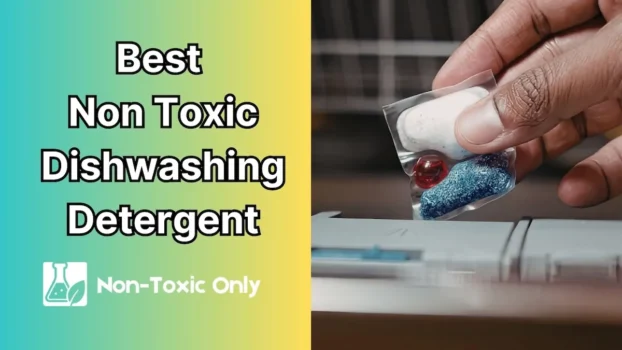
Most people don’t think twice about what’s in their dishwasher detergent—as long as the dishes come out clean.
But conventional detergents often rely on synthetic fragrances, dyes, and harsh surfactants that can leave behind chemical residues and contribute to water pollution once they’re rinsed down the drain.
As an environmental scientist who has worked in both water quality and toxicology, I know how these ingredients can affect both human health and aquatic ecosystems.
The good news is that the best non-toxic dishwashing detergents now deliver the same cleaning power without the trade‑offs.
Why are people switching to non‑toxic dishwasher detergents?
Most people don’t decide to switch to non‑toxic dishwasher detergent by accident—it happens after a moment of clarity.
You open the dishwasher mid‑cycle and that harsh “chemical lemon” scent hits you. Or maybe you start noticing headaches, dry skin, or throat irritation after every load.
Parents get there fastest, imagining that same invisible film left behind on their baby’s bottles or their toddler’s forks.
That’s when the shift happens. Because “clean” shouldn’t come with a chemical price tag.
Non‑toxic dishwasher detergents skip the synthetic fragrances, dyes, and harsh surfactants—so your plates, glasses, and baby bottles come out fresh, safe, and residue‑free
What Ingredients to Avoid in a Dishwasher Detergent
The Environmental Working Group (EWG) evaluates hundreds of dishwashing products and scores them from A to F, with A being the lowest‑hazard and F the highest.
Alarmingly, many mainstream formulas fall into the D–F range, including big names like Dawn, Cascade, and Finish, largely due to specific ingredient concerns and health or environmental hazard flags.
That’s why, when you’re shopping for a non‑toxic dishwashing powder, it’s worth slowing down to scan for those red‑flag ingredients before a box ever makes it into your cart.
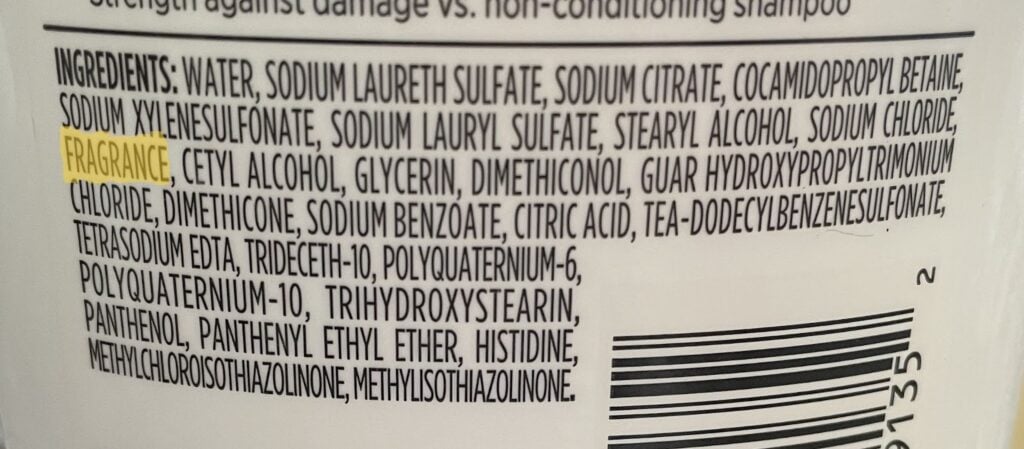
1. “Fragrance” or “Parfum”
“Fragrance” is a legally protected umbrella term that can hide dozens of chemicals, including phthalates and known sensitizers.
This is a problem because many of these compounds are linked to hormone disruption, headaches, asthma flares, and skin irritation, and they rarely have to be disclosed individually.
I strongly prefer fragrance‑free dishwasher detergents, especially for anything that will touch kids’ dishes, baby bottles, or sensitive skin.
For a deeper look at what’s really hiding behind “fragrance” on product labels, check out my detailed guide on toxic fragrance ingredients.
2. Phosphates and Phosphonates
Phosphates were widely used to soften water and boost cleaning, but they are a major contributor to eutrophication, algal blooms, and oxygen‑depleted waterways.
Many regions have restricted phosphates in household detergents, but they still appear in some products, and phosphonate derivatives show up as scale inhibitors.
Look for formulas labeled phosphate‑free and avoid anything with “phosphate” and “phosphonate.”
3. Chlorine Bleach and Chlorine‑Releasing Compounds
Chlorine bleach (sodium hypochlorite) and chlorine‑releasing chemicals are powerful oxidizers that can irritate eyes, skin, and lungs.
They’re not necessary for everyday dishwashing when you have good detergents and hot water, and they raise concerns about disinfection byproducts once they hit wastewater systems.
I look for chlorine‑free or “oxygen bleach only” formulas that rely on sodium percarbonate instead.
4. Synthetic Dyes and Colorants
Bright blue or green pods look fun, but synthetic dyes like FD&C Blue and Yellow‑5 are purely cosmetic and add unnecessary chemical exposure.
Some dyes are associated with behavioral and allergy concerns, and there’s simply no functional reason to have them in a dish product.
I prefer products that are dye‑free and don’t rely on color as a marketing gimmick.
If you want to understand why I steer clear of artificial colorants in household products, check out my articles on Red 40, Yellow 5, and Blue 1.
5. Ethoxylated Surfactants and PEG Compounds
Surfactants like sodium laureth sulfate (SLES), ethoxylated alcohols, and PEG compounds can be contaminated with 1,4‑dioxane, a probable human carcinogen.
They also tend to be more irritating to skin and eyes compared to some newer, plant‑based surfactants.
If a detergent uses surfactants, I prefer non‑ethoxylated, plant‑derived options (like alkyl polyglucosides) and avoid long lists of “‑eth” ingredients and PEGs wherever feasible.
6. Formaldehyde and Formaldehyde‑Releasing Preservatives
Formaldehyde is a known human carcinogen and a strong respiratory/skin irritant.
While it’s more of a concern in liquids and gels than dry powders, some preservatives can slowly release formaldehyde over time.
I avoid anything listing formaldehyde or known formaldehyde‑releasing preservatives and lean toward dry formulations that don’t need aggressive preservation.
7. Isothiazolinone Preservatives (MI/MCI)
Methylisothiazolinone (MI) and methylchloroisothiazolinone (MCI) are potent skin sensitizers and some of the most common causes of contact dermatitis from household cleaners and personal care products.
If you or anyone in your household has sensitive skin, eczema, or a history of allergies, I strongly recommend avoiding MI/MCI in dishwasher detergents.
8. Quats and Strong Disinfectant Chemistries
Quaternary ammonium compounds (“quats”) are common in disinfecting sprays and wipes, and they sometimes show up in “sanitizing” dish products.
They’re linked to respiratory irritation, potential reproductive effects, and persistent residues, and they’re not needed for routine dishwashing when you have hot water and a good detergent.
I stick with non‑disinfectant dishwasher products that rely on enzymes and oxygen‑based cleaning instead.
Ingredients I Prefer in Non-Toxic Dishwasher Detergents
Once you know what to avoid, it’s just as important to know what to look for—these are the ingredients I actively seek out in non‑toxic dishwasher detergents because they clean effectively without adding unnecessary stress to your body or the environment.
| Ingredient type | Examples | Why I like it |
| Mineral‑based builders | Sodium carbonate, sodium citrate | Soften water and adjust pH to boost cleaning power, without the environmental concerns linked to phosphates. |
| Oxygen bleach | Sodium percarbonate | Breaks down into washing soda and hydrogen peroxide for effective whitening and stain removal, without chlorine‑based byproducts. |
| Enzymes | Protease, amylase, lipase | Target proteins, starches, and fats so formulas can clean well even at lower temperatures and on shorter cycles. |
| Plant‑based non‑ethoxylated surfactants | Alkyl polyglucosides | Help lift food and grease while typically being readily biodegradable and lower in irritation potential than ethoxylated surfactants. |
| Simple, transparent formulas | Full disclosure, short lists, no dyes | Brands that fully list ingredients, avoid unnecessary additives and bright colors, and offer fragrance‑free or EO‑only options are ideal. |
My Top 5 Best Overall Non-Toxic Dishwasher Detergent Picks
1. Truly Free Dishwasher Detergent Powder | Natural Dish Detergent, Dishwasher Soap | Plastic Free, Plant-Based, Clean, Heavy Duty Hard Water Stain & Grease Remover | Fragrance Free | 12.5 oz (Pack of 3)

- Performs reliably in both hard and soft water, making it versatile for most homes.
- Fragrance‑free, dye‑free, and free of phosphates, chlorine bleach, and NPEs.
- Plant‑ and mineral‑based formula with enzymes for strong cleaning and anti‑spotting.
- Plastic‑free or refill‑style packaging to cut down on waste.
Amazon Rating: 4.7 stars out of 5.0 (1,360 ratings)
2. BLUELAND 100% Plastic-Free Dishwasher Detergent Tablets, 60 Count, Free & Clear, Eco-Friendly Dishwashing Pods, Natural, USDA Certified biobased

- Supported by strong third‑party certifications like EPA Safer Choice and USDA Biobased.
- Plastic‑free tablets that avoid PVA film and single‑use plastic packaging.
- Plant‑ and mineral‑based formula with enzymes and oxygen bleach for baked‑on food.
- Free from synthetic fragrance, dyes, and chlorine bleach.
Amazon Rating: 4.3 out of 5.0 stars (9,545 ratings)
3. Branch Basics Dishwasher Tablets – 120 Ct | Plastic-Free, Fragrance-Free, Human-Safe | Delivers a Powerful Clean Without Harsh Chemicals (40 Count (Pack of 3)

- Performs well on everyday loads while being gentle for sensitive households.
- Fragrance‑free (no synthetic perfume or essential oils) and dye‑free.
- Skips sulfates, chlorine, phosphates, phthalates, and PVA film.
- Short, transparent ingredient list aligned with a “human‑safe” philosophy.
Amazon Rating: 4.7 out of 5.0 (175 ratings)
4. Unscented Dishwasher Pods by AspenClean, Dye-Free, Zero Plastic, EWG Verified™, Vegan, Eco-Friendly, Natural Dishwasher Detergent – 28 Count
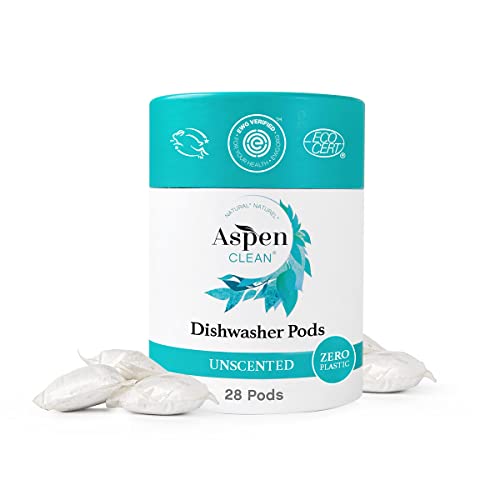
- Comes in plastic‑free, more easily recyclable packaging.
- EWG VERIFIED and EcoCert‑certified for ingredient safety and environmental standards.
- Fragrance‑free and dye‑free, ideal for those with allergies or sensitivities.
- Uses enzymes and oxygen bleach instead of phosphates or chlorine.
Amazon Rating: 4.1 stars out of 5.0 (531 ratings)
5. Dirty Labs | Dishwasher Detergent and Booster | Scent Free | 48 Loads (1 lb) | Ultra Clean, Spot Free, Quick Wash Optimized | Hyper Concentrated

- Designed to work in modern machines, even at lower temperatures and shorter cycles.
- Ultra‑concentrated powder that reduces packaging and shipping weight.
- Combines mineral builders (like washing soda and sodium citrate) with advanced enzymes.
- Non‑ethoxylated surfactants and a short, clearly explained ingredient list.
Amazon Rating: 4.4 stars out of 5.0 (2,604 ratings)
Pods vs. Powder: Which Non-Toxic Dishwashing Detergent Makes More Sense?
Pods and powder can both get your dishes clean, but they differ a lot in dosing control, cost, and how “non-toxic” and low-waste they really are in everyday use.
| Feature | Pods/tablets | Powder |
| Dosing control | Fixed dose for every load | Flexible; you can use more or less as needed |
| Convenience | Very convenient, just toss one in | Slightly less convenient; requires scooping |
| Cost per load | Typically higher due to unit‑dose packaging | Usually lower, especially in bulk or cardboard packaging |
| Packaging & waste | Often in PVA film plus extra packaging | Often cardboard or canister; no dissolvable plastic film |
| Non‑toxic options | Good options, but many still use PVA and extras | Many strong choices with simple, transparent formulas |
| Best fit | Households prioritizing simplicity and ease | Households focused on control, value, and lower waste |
For a more in‑depth breakdown, you can check out my full guides on non‑toxic dishwashing powders and on dishwashing pods/tablets.
FAQ
Are dishwasher pods or powder better if I want a non-toxic option?
Both can be non‑toxic, but powder usually has the edge because it often comes without PVA film, in simpler formulas and lower‑waste packaging. Pods can still be a good choice if you pick plastic‑free or carefully vetted non‑toxic tablets.
Do non-toxic dishwasher detergents actually clean as well as conventional ones?
Yes, a well‑formulated non‑toxic detergent with strong enzymes, mineral‑based builders, and oxygen bleach can clean just as well as conventional products, especially when you load the dishwasher correctly and choose an appropriate cycle.
Are “free and clear” dishwasher detergents always non-toxic?
Not necessarily. “Free & clear” usually means no dyes or fragrance, but formulas can still contain harsh surfactants, problematic preservatives, or other ingredients you may want to avoid, so reading the full ingredient list is key.
Is the PVA film on pods really a problem?
PVA is marketed as “biodegradable,” but emerging evidence suggests a meaningful portion may persist through wastewater treatment and contribute to microplastic pollution, which is why I lean toward powders or plastic‑free tablets.
Are essential oil–scented dishwasher detergents safer than synthetic fragrance?
Essential oils avoid some issues tied to synthetic fragrance blends, but they can still be irritating or allergenic for some people. For the most sensitive households, I usually recommend fragrance‑free formulas.
Read Next
Top 5 Best Non Toxic Dishwashing Tablets & Pods
Top 10 Best Non Toxic Laundry Detergents
Top 5 Best Water Filter Pitchers

The Best Water Filters of 2026 (from a Scientist)
Top 10 Best Non Toxic Cutting Boards
Top 10 Best Non-Toxic Candles in 2025
Top 5 Best Filtered Water Bottles
What is FD&C Red 40 Made of and its Side Effects?
What Is Yellow 5 (Tartrazine) and is it Bad for You?
What Is FD&C Blue 1 and is it Bad for You?
What are Parabens & Why are They Bad? From a Scientist
PFAS: Meaning, Definition, and How to Avoid
What are Phthalates? Pronunciation and Definition

What is Fragrance Made of? Ingredients List & Health Risks