Derek Ma, MSc
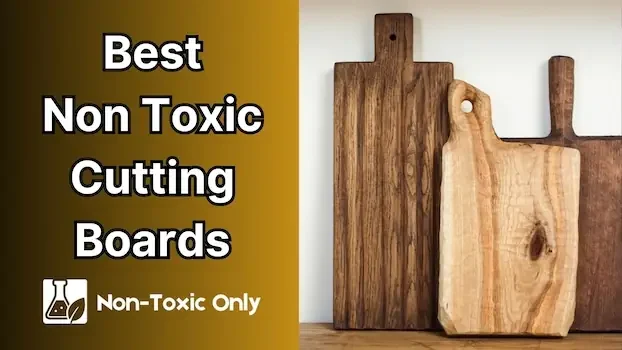
People are increasingly worried that cutting boards can introduce both microplastics and unwanted chemicals into their food. When my mother asked me for my best non toxic cutting board recommendations, I drew on my environmental science and toxicology educational and professional background to research and narrow down the best non toxic options.
Many conventional cutting boards are made from plastic or resin-heavy composites and may use harsh adhesives or antibacterial coatings that can shed microplastics or leach chemicals into your food.
That kicked off a deep dive into the top non-toxic cutting boards and brands available today, and now I’m excited to share those findings with you—but first, let’s talk about the science behind non-toxic cutting boards.
Toxic Materials to AVOID in a Cutting Board
As I was digging into this topic, I came across a study in the journal Environmental Science & Technology (ES&T).
In this paper, the researchers reported that the estimated annual microplastic exposure per person was 7.4–50.7 g from a polyethylene (plastic) chopping board and 49.5 g from a polypropylene (plastic) chopping board. (1🍃).
Many conventional boards are made from plastic or composite materials that can introduce unwanted chemicals or microplastics into food over time. (2🍃)
Knife cuts, heat, and repeated washing all accelerate this breakdown and potential exposure.
- Plastic boards (including “BPA-free”) can still shed microplastics and may contain other additives like phthalates (endocrine disruptor) or formaldehyde-based binders. (1🍃)
- Some composite and bamboo boards rely on adhesives or resins that can off-gas VOCs or include formaldehyde and other petrochemicals if not carefully formulated.
- Antibacterial or “germ-fighting” coatings can introduce unnecessary biocides like triclosan, which regulators have flagged for potential toxicity and environmental harm. (3🍃)
| Material / Treatment | Why to Avoid It | Health or Safety Concern |
| Plastic (Polyethylene, Polypropylene, TPU) | Knife scratches release microplastics; made with synthetic polymers that can leach chemicals. | Exposure to BPA, phthalates, and PVC; hormone disruption and allergy risks; microplastic ingestion. |
| Composite Boards | Can contain synthetic resins or adhesives to bind wood fibers. | Formaldehyde-based glues are carcinogenic and may off-gas or leach into food. |
| Bamboo & Non-Solid Wood Boards | Made of glued-together bamboo strips or wood particles. | Often use formaldehyde or synthetic adhesives; potential respiratory and cancer risks. |
| Resin / Epoxy Coatings | Can chip, scratch, and release chemicals into food. | May contain BPA, epichlorohydrin, or carboxylic acid; not safe for direct food contact. (9🍃) |
| Microban / Antimicrobial Coatings | Marketed as antibacterial or odor-resistant additives. | Contains Triclosan, an endocrine disruptor linked to hormone imbalance. |
| Non-Food Grade Mineral Oil | Petroleum-derived oils may include agricultural chemical residues. | Possible contamination with glyphosate and atrazine; long-term health effects. (10🍃) |
Best Types of Non Toxic Cutting Boards
A genuinely safer cutting board focuses on material and finish.
Non-toxic options prioritize food-safe, stable materials that are free from harmful additives and do not shed microplastics during typical use.
What to Look For
- Solid hardwoods (e.g., maple, walnut, cherry, birch, teak) from reputable sources, ideally FSC-certified and finished with food-safe oils or waxes.
- Single-piece wood boards or boards glued with documented food-safe, low-emission adhesives
- Neutral, non-reactive surfaces like titanium, tempered glass, or stainless steel, especially for people with allergies or high concern about contamination.
- Third-party certifications where applicable (e.g., NSF for food-contact safety)
Avoid These!
- Generic plastic boards, especially heavily worn or deeply scored ones.
- Unspecified “antibacterial” coatings or embedded biocides.
- Bamboo or “eco” boards with no disclosure about adhesives or finishes, particularly if they smell strongly chemical out of the box.
| Material | Safety / Toxicity (chemicals, microplastics) | Food-safety / Hygiene |
| Solid hardwood (maple, walnut, beech) | No plastic; no microplastic shedding; safest when one-piece or with formaldehyde‑free, FDA‑approved glue and simple food-safe oil/wax finish. | Naturally antimicrobial; studies and expert reviews find wood as safe or safer than plastic when cleaned properly. (4🍃) |
| Bamboo | Similar non-toxic profile to wood if made with formaldehyde‑free, food-grade glue and simple oil finish; very low emissions. (4🍃) | Naturally resistant to moisture and bacteria when maintained; considered safe for general use. (5🍃) |
| Wood‑fiber / paper composite (e.g., Richlite / Epicurean) | Made from wood fiber plus fully cured resin; very low VOCs and extremely low formaldehyde emissions (around 0.001 ppm) when certified; no microplastics. (4🍃) | Non‑porous, NSF food‑contact certified; easy to sanitize; resists stains and moisture. (4🍃) |
| Glass (tempered) | Inert, no leaching or microplastics; fully non‑toxic surface. (6🍃) | Completely non‑porous; very easy to clean and sanitize; highly resistant to staining and odors. |
| Stainless steel | Inert and non‑porous; no microplastics or added chemicals when uncoated. (7🍃) | Very easy to sanitize; suitable for high‑temperature cleaning. (7🍃) |
| Natural rubber (high‑quality chef boards) | No plastics; generally free of added antimicrobials when specified; no microplastic shedding. | Non‑porous and dense; used commercially; easy to sanitize and resurface. |
| Stone (granite, marble) | Inert and non‑porous; no chemical leaching. (7🍃) | Easy to wipe and sanitize; good for pastry, not ideal for regular chopping. (8🍃) |
My Recommendations for the Best Non Toxic Cutting Boards
1. Caraway Birch Wood Cutting Board

Caraway’s non toxic cutting boards are made from FSC-certified birch and finished with a food-safe blend of mineral oil and wax, which helps protect the wood without adding harsh varnishes or synthetic coatings.
Dishwasher safe: No, handwash only
Material: Birch wood
Finish: Food-safe mineral oil and wax
2. Greener Chef Bamboo Cutting Board
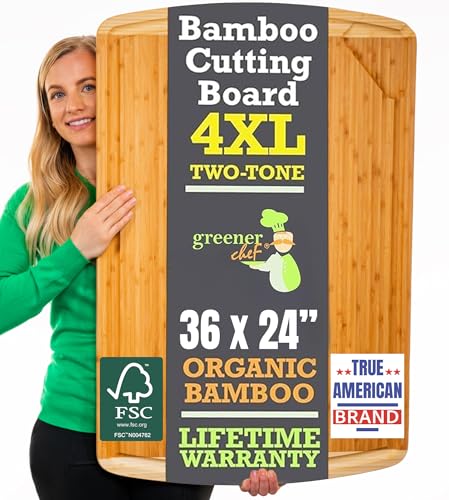
Upgrade your prep space with this FSC-certified bamboo cutting board, designed to double as a stovetop cover and roomy butcher block. The oversized surface is perfect for carving roasts, rolling dough, or building charcuterie spreads, and Greener Chef backs it with lifetime replacements for extra peace of mind.
Dishwasher safe: No, handwash only
Material: 100% organic Moso bamboo
Finish: Food-safe oil
3. Ziruma Acacia Wood Cutting Board

This Ziruma non-toxic cutting board is made from FSC-certified acacia and conditioned with a natural blend of beeswax, flaxseed, and lemon oil. That gives it a beautifully rich wood surface that’s gentle on knives, naturally water-resistant, and ready to use right out of the box for everyday chopping, carving, and serving.
Dishwasher safe: No, handwash only
Material: Acacia wood
Finish: Natural blend of beeswax, flaxseed, and lemon oil
4. JNE Hinoki Wood Cutting Board

This Hinoki Cypress Wood Cutting Board is a reversible, single-piece Japanese cypress board with no joints or glue, offering a naturally fragrant, gentle-on-knives surface that resists rot and bacteria, making it ideal as a lightweight chopping, butcher, and serving board
Dishwasher safe: No, handwash only
Material: Hinoki Cypress Wood
Finish: Not coated
5. John Boos Maple Cutting Board

John Boos Maple Cutting Board is a reversible butcher block made from solid North American hard maple, featuring recessed finger grips and an oil finish for a durable, knife‑friendly, professional‑grade prep surface that’s made in the USA and designed for long‑term kitchen use.
Dishwasher safe: No, handwash only
Material: Maple wood
Finish: Boos Block Mystery Oil (food-grade oil)
6. Oakjar Tempered Glass Cutting Board

This tempered glass cutting board gives you a completely plastic-free, non-porous surface that’s naturally resistant to stains, odors, and bacteria, and it can go straight into the dishwasher for easy cleanup. The clear boards double as sleek serving pieces or heat-resistant trivets, while integrated handles make them easy to move around the kitchen.
Dishwasher safe: Yes
Material: Tempered glass
Finish: Not necessary
7. Langbohos Tempered Glass Cutting Board
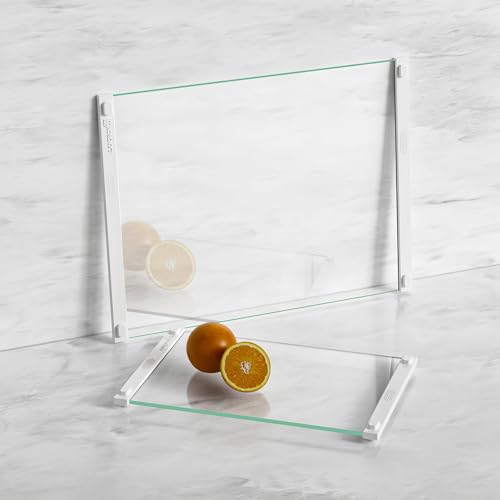
This glass non-toxic cutting board gives you a fully plastic-free, non-porous surface that won’t shed microplastics into your food and is easy to sanitize in the dishwasher. The tempered glass is marketed as 80% more shatter- and scratch-resistant, while silicone grips help keep each board from sliding around during chopping.
Dishwasher safe: Yes
Material: Tempered glass
Finish: Not necessary
8. APMRQIB Titanium Cutting Board

The APMRQIB Titanium non-toxic cutting board is 100% pure titanium and offers a double‑sided, non‑toxic, non‑porous cutting surface designed for hygienic food prep, excellent durability, and easy cleaning, including dishwasher compatibility.
Dishwasher safe: Yes
Material: 100% pure titanium
Finish: Not necessary
9. Taima Titanium Cutting Board
Taima cutting boards give you a truly clean prep surface by pairing ultra-durable materials with a non-toxic, non-leaching design that will not shed microplastics or unwanted chemicals into your food. Engineered to resist warping, odors, and deep knife grooves, they stay smooth, sanitary, and knife-friendly for years, making them a safer, longer-lasting choice than conventional plastic or coated boards.
Dishwasher safe: Yes
Material: 100% pure titanium
Finish: Not necessary
10. Epicurean Paper Composite
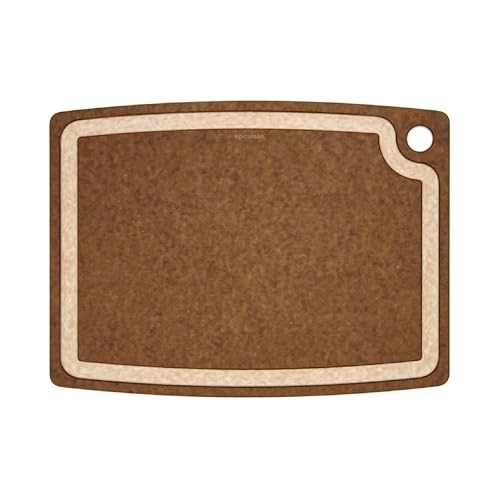
The Epicurean cutting board is a slim, dishwasher-safe wood-fiber composite board designed to be gentle on knives while providing a stable, low-profile prep surface for everyday cooking. Made in the USA from responsibly sourced, Greenguard-certified materials, it resists warping and deep staining, so it can double as both a hardworking chopping board and an attractive serving piece on the counter or table.
Dishwasher safe: Yes
Material: Paper Composite
Finish: Thermosetting resin – NSF certified
FAQ
How often should a non toxic cutting board be cleaned and sanitized?
After each use, scrape off food debris and wash the board with warm water and a mild, human-safe dish soap or castile soap, then rinse and dry immediately.
Avoid soaking wood or bamboo cutting boards, and never run them through the dishwasher, since prolonged moisture and high heat can cause warping, cracking, and glue failure.
How often should I oil my wood or bamboo cutting board, and what should I use?
For wood and bamboo boards, oil whenever the surface looks or feels dry.
Use a food-safe oil or board cream that aligns with your non-toxic criteria (for example, food-grade mineral oil or a stable plant-oil/beeswax blend), and always apply it on a completely dry board so the oil can penetrate and help repel water and stains.
What finishes, oils, or waxes are safe to use on a non-toxic cutting board, and which ones (like mineral oil, beeswax, or plant oils) should be avoided or preferred?
CuttingBoard.com has an excellent, in‑depth guide on which oils are actually safe to use on wooden cutting boards and butcher blocks, including which ones to avoid and why.
Are Rubber cutting boards toxic?
Food-grade natural rubber cutting boards are generally considered non-toxic and safe for food preparation when they are free from BPA, phthalates, and other harmful additives.
For the safest option, choose boards clearly labeled as food-grade natural rubber and avoid products made from unspecified synthetic rubber blends, especially if they have a strong chemical odor or lack material disclosure.
What Are The Pros and Cons of Titanium Cutting Boards?
Pros
- Non-toxic and inert: Food-grade titanium is biocompatible, does not leach chemicals, and is safe with acidic foods, offering a chemically stable surface similar to high-quality stainless but with even lower leaching.
- Hygienic and non-porous: The surface does not absorb moisture, odors, or stains, making it easy to sanitize, dishwasher-safe, and resistant to bacterial growth and cross-contamination.
- Extremely durable: Highly resistant to corrosion, warping, and heat; can tolerate hot pots and aggressive cleaning without degrading..
- Lightweight for a metal board: Lighter than stainless steel at similar thickness.
Cons
- Harsh on knives: The hard, non-yielding surface accelerates knife dulling and can even cause micro-chipping on harder steels, requiring more frequent sharpening than with wood or plastic.
- High cost and limited availability: Titanium boards are typically significantly more expensive than wood or bamboo.
- Cosmetic wear: Although functionally durable, the surface can show scratches and scuffs over time.
References
- Yadav, Himani, et al. “Cutting Boards: An Overlooked Source of Microplastics in Human Food?” Environmental Science & Technology, vol. 57, no. 22, 2023, pp. 8225–8235, https://doi.org/10.1021/acs.est.3c00924.
- “Composite Wood Products.” Healthy Materials Lab, Parsons School of Design, https://healthymaterialslab.org/material-collections/best-wood-products.
- “Product Responsibility: The Real Facts on Antimicrobial Products.” Promotional Products Association International (PPAI), www.ppai.org/media-hub/product-responsibility-the-real-facts-on-antimicrobial-products/.
- “Non-Toxic Cutting Boards: Safest (and Most Eco-Friendly) Options.” Let’s Go Green, 13 Nov. 2025, https://letsgogreen.com/blog/best-cutting-board-material/.
- “Safest Non-Toxic Cutting Boards – Wood, Bamboo, Glass, etc.” Mamavation, 2024, https://mamavation.com/home-goods/safest-non-toxic-cutting-boards-wood-bamboo-glass-etc.html.
- “Only These Three Cutting Board Types Are Truly Non-Toxic.” My Chemical-Free House, 6 Apr. 2025, https://www.mychemicalfreehouse.net/2024/01/only-these-three-cutting-boards-are-truly-non-toxic.html.
- “Safest Non-Toxic Cutting Boards – Wood, Bamboo, Glass, etc.” Mamavation, 29 Sept. 2025, https://mamavation.com/home-goods/safest-non-toxic-cutting-boards-wood-bamboo-glass-etc.html.
- “What Is the Healthiest Cutting Board to Use?” Healthier Homes, 14 Apr. 2025, https://www.healthierhomes.com/post/what-is-the-healthiest-cutting-board-to-use.
- “Microplastics from chopping boards: An unknown source of exposure?” Materials Today: Proceedings, vol. 50, 2022, pp. 1484–1489, https://www.sciencedirect.com/science/article/abs/pii/S2214785321017260.
- “The Purpose of Food-Grade Mineral Oil: A Comprehensive Guide.” Misen, https://misen.com/blogs/news/the-purpose-of-food-grade-mineral-oil-a-comprehensive-guide.
Read Next
Top 5 Best Stainless Steel Baking Sheets
The Best Water Filters of 2026 (from a Scientist)


Top 10 Best Non Toxic Laundry Detergents
Top 5 Best Non Toxic Hand Soaps
Top 5 Best Non Toxic Dishwashing Detergents
Top 7 Best Non Toxic Body Washes
Top 5 Best Non Toxic Dishwashing Tablets & Pods
Top 5 Best Filtered Water Bottles
What is FD&C Red 40 Made of and its Side Effects?
What Is Yellow 5 (Tartrazine) and is it Bad for You?
What Is FD&C Blue 1 and is it Bad for You?
What are Parabens & Why are They Bad? From a Scientist
PFAS: Meaning, Definition, and How to Avoid
What are Phthalates? Pronunciation and Definition

What is Fragrance Made of? Ingredients List & Health Risks