Derek Ma, MSc
My interest in filtered water bottles started when my brother got me a LARQ water bottle for Christmas, and as an environmental scientist who has worked in aquatic toxicology and water quality, I couldn’t help going down the rabbit hole of what it actually filters—especially PFAS, heavy metals, and microplastics.
Since I knew how many different contaminants can show up in everyday drinking water, I started comparing what popular filtered water bottles actually do, how they’re tested, and which materials are safest to drink from long-term.
In this article, I’ll break down what to look for in a non toxic filtered water bottle and share my top five best options that make the most sense from both a health and practicality standpoint, whether that’s for everyday use, international travel, hiking, tap water, and more.
Why Choose Filtered Water Bottles?
Filtered water bottles are worth choosing because they lower your exposure to contaminants while also cutting plastic waste and costs over time. They’re one of the simplest swaps to make your daily hydration safer and more sustainable.
Reduce contaminant exposure from heavy metals, PFAS, and bacteria
Quality filters in bottles can be NSF/ANSI certified to significantly reduce chlorine, some heavy metals, PFAS, and organic pollutants, giving you cleaner, better‑tasting water wherever you fill up.
NSF/ANSI certifications tell you what a filter is actually proven to do, not just what the marketing says.
You can learn more about what these various NSF/ANSI certifications mean in my water filter recommendation article: Best Water Filters of 2026.
Replace bottled water
Relying on single‑use plastic bottles adds up to hundreds of bottles per person per year, most of which are not recycled and eventually break down into microplastics.
Practical everyday benefits
Filtered bottles make it easy to get consistent‑quality water at work, the gym, airports, or while traveling, without hunting for “safe” bottled brands.
What to Look For in a Filtered Water Bottle
| Feature to check | What it means in practice | Why it matters for health/safety |
| Filter certifications | NSF/ANSI 42, 53, 401, P231, P473 listed on packaging or website. | Confirms tested reduction of chlorine, metals, “emerging contaminants,” and/or microbes. |
| Contaminants reduced | Clear list of what it targets (chlorine, PFAS, lead, bacteria, etc.). | You can match the filter to your actual water concerns instead of guessing. |
| Filter life & capacity | Gallons or months before replacement, plus how easy/cheap the cartridges are. | Affects long‑term cost, performance, and whether you realistically keep using it. |
| Bottle material | 18/8 stainless steel or glass preferred; plastics labeled BPA/BPS‑free and food‑grade. | Limits leaching of plasticizers and heavy metals into your drinking water. |
| Microbiological protection | Mentions bacteria/protozoa/viruses removal if you’ll use it for travel or outdoors. | Critical if you’re filling from questionable taps, wells, or natural sources. |
| Flow rate & usability | How hard it is to sip or press, leak‑proof lid, straw vs chug, one‑handed use. | If it’s annoying to drink from, you won’t use it consistently. |
| Size and weight | Ounces/liters plus whether it fits cup holders or backpack pockets. | Determines whether it works for commuting, travel, hiking, or kids. |
| Maintenance & cleaning | Disassembles easily, can be scrubbed, some parts dishwasher‑safe if specified. | Reduces mold/biofilm growth and keeps the filter working properly. |
| Brand transparency | Accessible test reports, clear materials info, and honest limitations. | Makes it easier to trust performance claims and avoid greenwashing. |
My Recommended Filtered Water Bottles
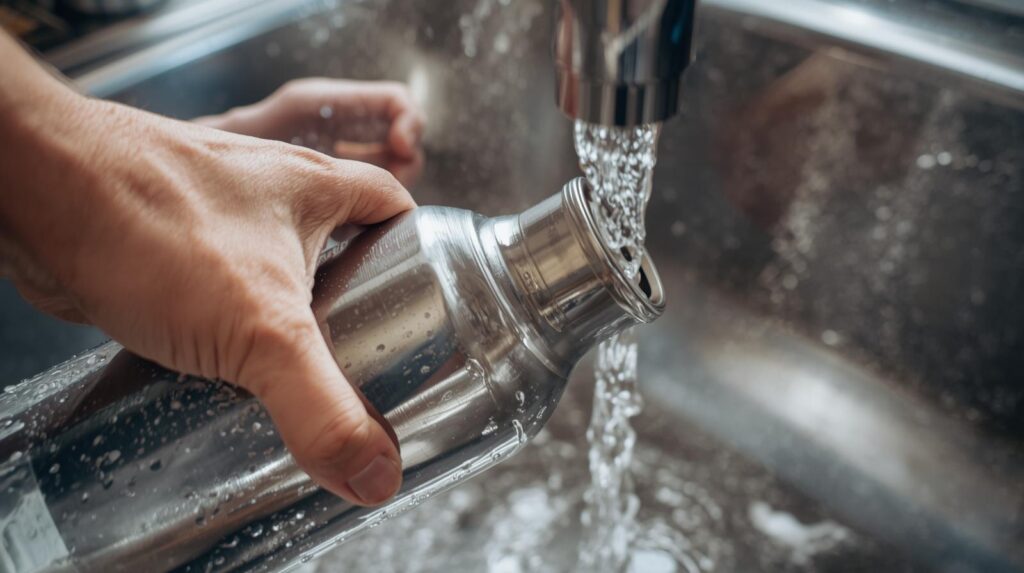
Below are my top 5 best options, categorized by use case and focusing on both filtration and non‑toxic materials. Where possible, favor stainless steel models over plastic for lowest leaching risk.
1. Best Overall Contaminant Removal for Tap Water: Clearly Filtered Insulated Stainless Steel Filtered Water Bottle
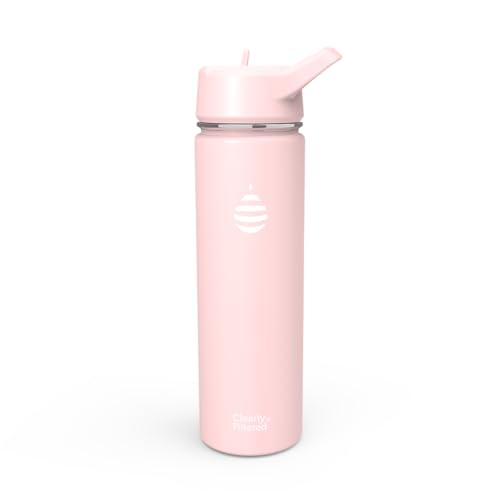
Removes more than 200–220 contaminants, including chlorine, fluoride, lead and other heavy metals, pesticides, herbicides, pharmaceuticals, and VOCs, with third‑party test data available.
Double‑wall stainless steel design reduces contact with plastic, while the filter uses a combination of activated carbon and proprietary media to address both taste and health‑relevant contaminants.
Bottle Material: Stainless Steel
Filter Certifications: IAPMO Lab tested to comply with NSF/ANSI standards 42, 53, 401 and 473.
Sizes: 16 fl oz, 20 fl oz, 32 fl oz,
Best for: Daily use in cities or suburbs where tap water is treated but may contain PFAS, microplastics, and residual chemicals; anyone wanting maximum contaminant reduction in a portable bottle.
2. Best for Hiking, Traveling, and Bacteria Protection: LifeStraw Stainless Steel Water Filter Bottle

LifeStraw filtered water bottles combine a membrane microfilter (to remove bacteria and protozoa) with an activated carbon filter for chlorine and some chemicals, packaged in a stainless‑steel bottle body to reduce plastic contact.
LifeStraw’s filtration technology is widely used for humanitarian and outdoor applications and is independently tested to meet bacteria and protozoa reduction performance claims.
Bottle Material: Stainless Steel
Filter Certifications: LifeStraw owns and operates a fully equipped ISO certified water laboratory; NSF P231 standards (removal of bacteria and parasites) and NSF/ANSI 42
Sizes: 18oz, 24oz, or 34oz
Best for: Travelers and hikers who prioritize microbiological safety but prefer stainless steel over plastic bottles.
3. Best for International Travel and High‑Risk Water: Grayl GeoPress Purifier

Laboratory‑tested to remove 99.99% of viruses, 99.9999% of bacteria, and 99.9% of protozoan cysts, while also filtering sediment, microplastics, chemicals, pesticides, and many heavy metals using a multi‑stage purifier cartridge.
This water bottle uses a press‑style system (similar to a French press) that allows you to quickly push contaminated water through the filter and then pour clean water into other containers.
Bottle Material: CP4 Grade 1 Titanium
Filter Certifications: NSF Protocol 43 & 53 – Independently tested to meet/exceed standards for pathogen and chemical removal.
Sizes: 16.9 oz
Best for: Backpacking, international travel in regions with poor water treatment, and emergency preparedness where microbial safety is a top priority.
4. Best UV Purification and Filter Straw: LARQ Self‑Cleaning Water Bottle

LARQ bottles use built‑in UV‑C LED technology (and, in some models, a replaceable filter) to neutralize bacteria and reduce common contaminants for fresher‑tasting water with minimal effort.
LARQ’s filter straw turns compatible bottles into portable tap-water filters using a high-performance Nano Zero filter for smoother, cleaner-tasting water. It reduces chlorine, PFAS (PFOA/PFOS), and pharmaceuticals, is tested to NSF/ANSI 42, 53, and 401 standards, and is designed for low-pressure, easy sipping with filters that last about 25 gallons or 2 months of use.
The insulated stainless‑steel body avoids plastic contact with water, keeps drinks cold for hours, and pairs with long‑lasting purification cycles that recharge via USB instead of frequent cartridge changes.
Bottle Material: 18/8 Stainless Steel
Filter Certifications: Filter Straw tested to NSF/ANSI 42, 53 & 401 standards
Sizes: 23 oz and 34 oz
Best for: Those who want a stylish, low‑maintenance bottle with on‑the‑go UV purification and are willing to charge a smart bottle for extra convenience and cleaner taste.
5. Best Budget Everyday Use: Brita Premium Filtering Water Bottle

Brita’s premium filtering bottle uses an integrated straw filter that reduces chlorine taste and odor and some additional contaminants, improving flavor and odor of typical tap water while remaining lightweight and easy to carry.
The BPA‑free plastic body is cup‑holder friendly and features a leak‑resistant, one‑hand push‑button lid with enclosed straw, making it convenient for daily commuting, travel, or gym use, and the filter is designed to last about 40 gallons or 2 months, replacing up to roughly 300 single‑use 500 mL bottles.
Bottle Material: Stainless steel or BPA-free Hard-Sided Plastic
Filter Certifications: Tested and certified by the Water Quality Association (WQA) to NSF/ANSI 42
Sizes: 26 oz or 36 oz (Hard-sided Plastic) or 20 oz or 32 oz (stainless steel)
Best for: Office, gym, and school use where the primary concern is chlorine taste and odor rather than full‑spectrum contaminant removal.
FAQ
What is a filtered water bottle?
A filtered water bottle is a reusable bottle that has a built‑in filtration system to clean the water as you drink or as you fill it. The goal is to improve safety, taste, and odor by reducing certain contaminants like chlorine, sediment, and sometimes microbes or heavy metals.
Are filtered water bottles good for you?
Yes, because filtered water bottles reduce chemicals like chlorine, some heavy metals, and in some cases PFAS, lowering overall contaminant exposure. Most filtered water retains beneficial minerals such as calcium and magnesium, so you are not “de-mineralizing” your water with typical bottle filters. In addition, better taste and odor encourage higher water intake, which supports hydration, kidney function, energy, and overall wellness.
What filtered water bottle is the best?
There is no single “best” filtered water bottle; the right choice depends on whether you’re filtering LA tap, airport sinks, or backcountry water, and which contaminants you care about (PFAS, lead, microbes, etc.).
Is it healthier to drink bottled water or filtered tap water?
For most people in the U.S., well‑maintained filtered tap water is as safe or safer than bottled water and is generally the healthier long‑term choice, especially when you factor in microplastics and weaker regulation of bottled water.
Read Next
Top 5 Best Water Filter Pitchers

Top 4 Best Reverse Osmosis Water Filters
The Best Water Filters of 2026 (from a Scientist)
The Truth About Microplastics in Bottled Water
Top 5 Best Gravity Fed Water Filter Systems
Top 10 Best Non Toxic Laundry Detergents
Top 5 Best Non Toxic Dishwashing Detergents
Top 5 Best Non Toxic Hand Soaps

Top 10 Best Non Toxic Cutting Boards

Top 5 Best Stainless Steel Baking Sheets

Top 5 Best Non Toxic Dishwashing Tablets & Pods
What is FD&C Red 40 Made of and its Side Effects?
What Is Yellow 5 (Tartrazine) and is it Bad for You?
What Is FD&C Blue 1 and is it Bad for You?
What are Parabens & Why are They Bad? From a Scientist

PFAS: Meaning, Definition, and How to Avoid
What are Phthalates? Pronunciation and Definition

What is Fragrance Made of? Ingredients List & Health Risks