Derek Ma, MSc
People keep asking me whether the sulfates in their soaps and shampoos, sodium lauryl sulfate (SLS) and sodium laureth sulfate (SLES), are truly “non-toxic,” especially when they show up in everything from toothpaste and face wash to hand soap.
Unfortunately, it is not a straightforward yes or no.
These surfactants do a great job at cleaning and are generally viewed as safe at the levels used in most products, but they can still irritate your skin and eyes, put some strain on aquatic ecosystems, and for SLES raise extra questions because of potential contamination with 1,4 dioxane, a chemical that the EPA has established to be likely carcinogenic to humans. (2🍃)
In this article, I am taking a closer look at SLS and SLES through the lens of my background in environmental science and toxicology, to unpack what the research actually shows, clear up some of the most common myths, and help you decide when it really makes sense to avoid these ingredients and when the risk is likely minimal
At a glance
- SLS: Strong cleanser, well‑documented irritant; no evidence of carcinogenicity at cosmetic use levels, but rough on the skin barrier with frequent use.
- SLES: Designed to be gentler; still an irritant, with the main long‑term concern being 1,4‑dioxane, a probable human carcinogen formed during ethoxylation.
- For sensitive or eczema‑prone scalps: Most dermatology sources favor sulfate‑free formulas over either SLS or SLES.
- For average, healthy scalps: Well‑formulated, rinse‑off products with modest SLS/SLES levels are generally considered acceptable if you are not noticing irritation
Why Are Sulfates in So Many Products?
SLS is basically a workhorse detergent, also known as a surfactant.
In simple terms, it grabs onto oil, grease, fats, and dirt so they can be lifted off your skin, clothes, or dishes and rinsed away.
It is also what gives many products that big, satisfying foam and helps them spread easily over surfaces.
In food, SLS shows up for a different reason. It acts as an emulsifier, helping ingredients that normally would not mix, like oil and water, stay blended together.
In liquid egg products, it helps keep the mixture from separating, and in something like marshmallows, it helps create that light, fluffy texture.
Which Products are SLS/SLES Found in?
If you start reading labels, you will see SLS and SLES popping up across a wide range of personal care and cleaning products.
| Product type | Common examples that often contain SLS/SLES | Notes |
| Shampoo | Standard “moisturizing,” “volumizing,” anti‑dandruff, and 2‑in‑1 shampoos from big drugstore brands. | SLS/SLES provide strong cleansing and lots of foam; common in non‑“sulfate‑free” lines. |
| Conditioner | Some conventional conditioners and 2‑in‑1 shampoo/conditioners. | Less common than in shampoo, but can appear as secondary surfactants. |
| Body wash & shower gel | Gel body washes, “moisturizing” shower gels, and foaming bath gels. | Used as primary detergents and foam boosters. |
| Hand soap | Liquid hand soaps, foaming hand washes, antibacterial soaps. | Major source of frequent daily skin exposure. |
| Facial cleansers | Gel cleansers, foaming face washes, acne cleansers, some makeup removers. | SLS/SLES can be too stripping for sensitive or barrier‑impaired skin. |
| Toothpaste | Most mainstream toothpaste brands and some whitening pastes. | SLS/SLES used to create foam and help disperse paste; linked to irritation and canker sores in some people. |
| Mouthwash & oral gels | Some mouthwashes and dental gels. | Used as surfactants to help solubilize ingredients and foam. |
| Shaving cream/foam | Aerosol shaving foams and gels. | Provide lather and slip; frequent contact with already irritated skin. |
| Bath products | Bubble baths, bath bombs, bath oils/salts labeled as “foaming.” | Big SLS/SLES exposure source for kids due to long soak times. |
| Creams & lotions | Some hand creams, depilatory creams, sunscreens, and lotions. | Used at lower levels to aid emulsification and spread. |
| Hair styling products | Some styling gels, mousses, and hair dyes. | Surfactants help dispersion and rinse‑out. |
| Household cleaners | Dish soaps, laundry detergents, all‑purpose cleaners, car wash soaps, carpet cleaners, engine degreasers. | SLS more common in heavy‑duty cleaning; SLES widely used in liquid detergents. |
How to Read Product Labels for SLS and SLES
On an ingredient list:
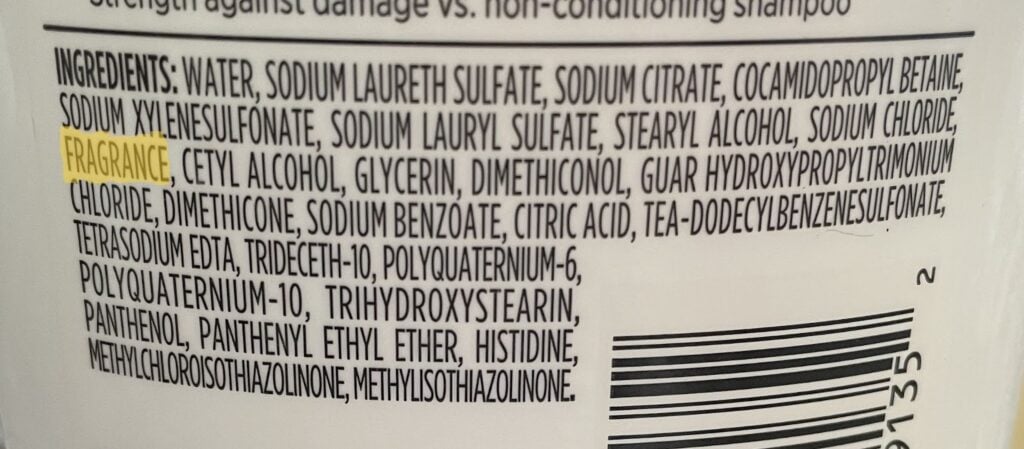
SLS usually appears as “sodium lauryl sulfate” or “sodium dodecyl sulfate.”
SLES appears as “sodium laureth sulfate” or “sodium lauryl ether sulfate”, and “laureth” in the name is a giveaway that it’s ethoxylated (a chemical process where ethylene oxide is added to an ingredient to make it more water soluble).
Many ingredients with “eth” in the name, like PEGs (polyethylene glycols), ceteareth, steareth, and polysorbates, are also made through ethoxylation, so they can carry similar 1,4 dioxane contamination concerns and often show up on stricter “avoid” lists in non-toxic circles.
Are Sulfates safe? What do the Experts Say?
Experts generally see SLS/SLES as effective but potentially irritating cleansers, not major long‑term toxins, with advice that changes based on skin/hair type and philosophy.
The Cosmetic Ingredient Review (CIR)
The Cosmetic Ingredient Review panel says SLS is safe in products meant for brief use and thorough rinsing, and recommends low concentrations (around 1% or less) for anything that stays on the skin to avoid irritation. (1🍃)
For SLES, CIR concludes sodium laureth sulfate and ammonium laureth sulfate are “safe as presently used” in cosmetics, while noting they are dermal (skin) and eye irritants that must be formulated so they are non‑irritating in real‑world use.
EPA and regulators
EPA does not treat SLS/SLES the way it treats PFAS; they are not flagged as high‑priority persistent pollutants, and SLS is even allowed as a food additive within FDA guidelines. (3🍃)
Regulatory focus for SLS/SLES is mainly on local irritation and concentration limits, not systemic toxicity or cancer.
Environmental Working Group (EWG)
EWG tends to flag SLS and SLES as lower‑concern surfactants. Both are scored relatively low on EWG’s numeric hazard scale (SLS at 1 and SLES at 1–3). (4🍃)
The ingredient score for SLES is higher in products you can inhale (like sprays or powders) and lower in products with little inhalation risk (like liquids or solid bars). (5🍃)
It should be noted that both ingredients are still restricted in EWG VERIFIED formulas, meaning brands have to provide extra substantiation before these ingredients are allowed.
Dermatologists and hair/skin experts
Dermatology and hair experts say sulfates clean well but can strip too much oil, leading to dryness, frizz, and irritation in some people, especially with frequent use or higher strengths. (6🍃)
Many dermatologists and the American Academy of Dermatology (AAD) recommend sulfate‑free or low‑sulfate formulas for eczema, rosacea, or sensitive skin, while saying average, healthy scalps can often tolerate sulfates in a well‑formulated, rinse‑off product. (7🍃)
Consumer‑facing health outlets
Outlets like Healthline and Medical News Today summarize the science as: SLS/SLES are irritants, not carcinogens, and are generally safe at low concentrations in rinse‑off products, but people who notice dryness or irritation should switch to gentler options. (7🍃)
Ingredient safety centers emphasize that sulfates are safe within regulatory limits, yet acknowledge that personal comfort and barrier health are good reasons to choose milder surfactants if sulfates do not agree with you.
| Aspect | SLS (Sodium Lauryl Sulfate) | SLES (Sodium Laureth Sulfate) |
| Main health effect | Strong local irritant to skin, eyes, and mucous membranes; increases TEWL and weakens the skin barrier with repeated use.pmc.ncbi.nlm. (17🍃) | Generally milder irritant than SLS but can still cause dryness, redness, and stinging in sensitive users. (18🍃) |
| Systemic / long‑term concerns | Reviews and safety assessments do not find evidence of carcinogenicity or systemic toxicity at cosmetic use levels; concern is mainly irritation. (17🍃) | Main concern is not the surfactant itself but potential contamination with 1,4‑dioxane, a likely human carcinogen and drinking‑water contaminant formed during ethoxylation. (18🍃) |
| Non‑toxic perspective | Often avoided in “gentle” or “non‑toxic” products because of its harsh effect on the skin barrier and mucous membranes, especially with frequent use. (19🍃) | Often flagged due to its ethoxylated nature and associated 1,4‑dioxane issue; many non‑toxic brands skip both SLS and SLES in favor of milder, non‑ethoxylated surfactants. (19🍃) |
SLS vs SLES: SLES is Gentler, but Watch the 1,4‑Dioxane
SLES was developed to be less irritating than SLS at similar cleansing levels.
The unique concern for SLES is not the surfactant itself but possible contamination with 1,4‑dioxane, a probable human carcinogen formed as a byproduct of ethoxylation. (15🍃)
Ethoxylation makes the molecule more flexible and reduces its tendency to penetrate and disrupt the outer layers of skin.
SLES can still cause dryness, redness, and stinging in sensitive individuals, especially with frequent washing or when combined with fragrance and alcohol.
Responsible manufacturers can vacuum‑strip and test to reduce 1,4‑dioxane, but this purification step is typically not disclosed on labels. (14🍃)
If you’d rather not think about SLS/SLES or 1,4‑dioxane at all, you can jump over to my non‑toxic body wash and hand soap guide where I walk through gentler surfactants and share the specific formulas I actually recommend.
How SLS/SLES affect the Scalp and Hair
SLS is very efficient at removing sebum (oily substance produced by sebaceous glands that lubricates and protects the skin and hair from drying out) and product buildup, but that same power can over‑strip the scalp.
| Study type / context | Key findings | What it means in practice |
| Human and animal skin studies | 1–2% SLS solutions significantly increase transepidermal water loss (TEWL) and cause mild but measurable skin inflammation. (13🍃) | Even “typical” SLS levels can weaken the skin barrier and cause low‑grade irritation, especially with repeated use. (13🍃) |
| Dermatology irritation models | SLS is used as a standard model irritant in patch tests to induce irritant contact dermatitis in research settings. (12🍃) | SLS is reliably irritating, which is why it is chosen to deliberately trigger skin irritation in controlled experiments. (12🍃) |
| Hair and scalp research | Frequent SLS exposure is linked to scalp dryness, itching, irritation, and roughening of the hair cuticle, causing breakage and faster color fading. (11🍃) | Regular use of strong SLS shampoos may worsen dry or sensitive scalps, damage hair structure, and fade hair dye faster. (11🍃) |
Scalp Health: Irritation, Dandruff, and Barrier Function
Your scalp is skin, and the same irritant mechanisms you see in patch tests show up in the shower.
Repetitive SLS exposure has been shown in human studies to increase skin redness, dryness, and transepidermal water loss (TEWL), with irritation parameters peaking during ongoing use and then returning toward baseline once SLS is removed. (16🍃)
Haircare experts and trichologists note that harsh anionic surfactants (like SLS) can remove essential lipids, aggravating scalp sensitivity, dryness, and flaking.
In people prone to dandruff or seborrheic dermatitis, barrier disruption and irritation can make flares worse even if the shampoo also contains antifungal agents.
SLES tends to be better tolerated but is not universally “non‑irritating.” Sensitive‑scalp and eczema‑friendly shampoos from cleaner brands often avoid both SLS and SLES and instead use milder blends of nonionic and amphoteric surfactants.
Gentle Surfactant Alternatives to SLS and SLES
Here are some commonly used milder surfactants that formulators often use instead of SLS/SLES in shampoos, face washes, and body washes.
Gentle nonionic surfactants (very mild)
These alkyl glucosides are plant‑derived, biodegradable, and generally considered very mild, making them popular in “sulfate‑free” and sensitive‑skin formulas.
Coco glucoside: plant‑derived surfactant made by combining fatty alcohols from coconut oil with glucose (a simple sugar) (9🍃)
Decyl glucoside: plant‑derived surfactant made by combining a fatty alcohol (from coconut or palm‑kernel oil) with glucose
Lauryl glucoside: plant‑derived surfactant made by combining a fatty alcohol (from coconut or palm‑kernel oil) with glucose
Caprylyl/Capryl glucoside: plant‑derived surfactant made by combining a fatty alcohol (from coconut or palm‑kernel oil) with glucose
Mild anionic surfactants
These deliver good cleansing and foam with lower irritation potential than SLS/SLES and are common in syndet bars and gentle shampoos.
Sodium cocoyl isethionate (SCI): A mild, coconut‑derived anionic surfactant
Sodium lauryl sulfoacetate (SLSa): A gentle, coconut‑/palm‑derived anionic surfactant
Disodium laureth sulfosuccinate: mild sulfate‑free anionic surfactant
Amphoteric “helper” surfactants
Amphoteric surfactants are typically sulfate‑free and used to boost foam and reduce the harshness of primary surfactants in gentle or baby cleansers.
Cocamidopropyl betaine: coconut‑derived surfactant that boosts foam and cleansing while helping make formulas milder and less irritating than strong sulfates. (10🍃)
Coco betaine: A naturally derived, coconut‑based surfactant that provides gentle cleansing and lather, often used alongside glucosides in “sulfate‑free” or sensitive‑skin formulas.
Disodium cocoamphodiacetate: A mild, coconut‑derived surfactant used in baby and sensitive‑skin shampoos and washes to create soft foam and cleanse without stripping.
Quick Science Note: Nonionic surfactants are surfactants with no electrical charge on the “water‑loving” end of the molecule. (8🍃) Because they are uncharged and rely on neutral groups (like sugar or ethoxylated chains) to interact with water, they tend to be milder and less irritating, which is why they’re often used in gentle and sensitive‑skin cleansers.
However: Most cleaners mix anionic and nonionic surfactants to get strong cleaning power while keeping skin irritation in check. (8🍃)
FAQ
Does SLS/SLES accumulate in the body?
SLS can penetrate into the outer skin layers and hair follicles but is rapidly metabolized and excreted, with no evidence of bioaccumulation or chronic organ toxicity at cosmetic exposure levels. SLES shows similar behavior, with local irritation rather than systemic buildup being the primary concern.
Do SLS or SLES cause cancer?
SLS itself is not considered carcinogenic in current evaluations. The cancer discussion relates to 1,4‑dioxane, a probable human carcinogen that can contaminate SLES and other ethoxylated ingredients, and which New York and other regulators are now strictly limiting in consumer products.
Is SLES actually milder than SLS?
Head‑to‑head studies show SLES causes less TEWL increase and milder visible irritation than SLS at the same concentrations, although both are irritants.
In practice, SLES shampoos are often more comfortable for normal scalps but can still bother highly sensitive users.
At what concentrations do SLS/SLES become irritating?
Patch tests show that SLS above roughly 0.5–2% in 24–48‑hour occluded exposures is clearly irritating to many people, with severity scaling with dose and time.
SLES produces weaker reactions at the same tested levels, but irritation still appears at higher concentrations and prolonged contact.
How should someone with a sensitive or problem scalp choose?
People with eczema, psoriasis, seborrheic dermatitis, or a history of shampoo‑related stinging usually do best with sulfate‑free, fragrance‑minimal formulas built around glucosides and amphoterics rather than SLS or SLES.
If symptoms improve after switching, that is a strong practical signal that sulfates were part of the problem.
References
- 🍃Healthline. Sodium Lauryl Sulfate (SLS): Uses, Products, Possible Dangers & More. Healthline; accessed 2026. Available from: https://www.healthline.com/health/beauty-skin-care/what-is-sodium-lauryl-sulfate
- 🍃U.S. Environmental Protection Agency (EPA). Technical Fact Sheet – 1,4-Dioxane. EPA; c2014. Available from: https://semspub.epa.gov/work/01/575107.pdf
- 🍃American Chemistry Council. Sodium Lauryl Sulfate (SLS) – Chemical Safety Facts. ChemicalSafetyFacts.org; accessed 2026. Available from: https://www.chemicalsafetyfacts.org/chemicals/sodium-lauryl-sulfate-sls/
- 🍃Environmental Working Group (EWG). EWG Skin Deep® – Sodium Lauryl Sulfate. EWG; accessed 2026. Available from: https://www.ewg.org/skindeep/ingredients/706110-SODIUM_LAURYL_SULFATE/
- 🍃Environmental Working Group (EWG). EWG Skin Deep® – Sodium Laureth Sulfate. EWG; accessed 2026. Available from: https://www.ewg.org/skindeep/ingredients/706089-SODIUM_LAURETH_SULFATE/
- 🍃The Lauren Ashtyn Collection. Six Experts on Sulfates in Shampoo. TheLaurenAshtynCollection.com; accessed 2026. Available from: https://thelaurenashtyncollection.com/blogs/blog/here-s-what-6-experts-have-to-say-about-sulfates-in-shampoo
- 🍃Healthline. Sulfate in Shampoo: What It Is, Fine Hair, Natural Hair, and More. Healthline; 2017. Available from: https://www.healthline.com/health/sulfate-in-shampoo
- 🍃Safe Household Cleaning. What Are Anionic and Nonionic Surfactants? SafeHouseholdCleaning.com; accessed 2026. Available from: https://safehouseholdcleaning.com/anionic-nonionic-surfactants/
- 🍃Branch Basics. Coco Glucoside: What Is It & Is It Safe for Your Skin? BranchBasics.com; accessed 2026. Available from: https://branchbasics.com/blogs/cleaning/coco-glucoside
- 🍃Wikipedia. Cocamidopropyl betaine. Wikipedia; last updated 2026. Available from: https://en.wikipedia.org/wiki/Cocamidopropyl_betaine
- 🍃Living Proof. What Does Sulfate Do To Your Hair? LivingProof.com; accessed 2026. Available from: https://www.livingproof.com/blogs/hair-101/what-does-sulfate-do-to-your-hair
- 🍃Agner T, Serup J. Irritant patch testing with sodium lauryl sulphate: interrelation between concentration and exposure time. Br J Dermatol. 2001;145(5):704‑708. Available from: https://academic.oup.com/bjd/article-abstract/145/5/704/6688004
- 🍃Agner T, Serup J. The transient and cumulative effect of sodium lauryl sulphate on the epidermal barrier assessed by transepidermal water loss: inter-individual variation. Acta Derm Venereol. 1990;70(3):190‑194. Available from: https://pubmed.ncbi.nlm.nih.gov/1967864/
- 🍃Tilley S. Cleaning out a carcinogenic contaminant. Chem Eng News. 2025;103(2). Available from: https://cen.acs.org/business/consumer-products/Cleaning-carcinogenic-contaminant/103/i2
- 🍃Campaign for Safe Cosmetics. Ethoxylated Ingredients. SafeCosmetics.org; accessed 2026. Available from: https://www.safecosmetics.org/chemicals/ethoxylated-ingredients/
- 🍃Tupker RA, Coenraads PJ, et al. Long-term repetitive sodium lauryl sulfate-induced irritation of the skin: an in vivo study. Contact Dermatitis. 2006;54(5):258‑265. Available from: https://pubmed.ncbi.nlm.nih.gov/16283906/
- 🍃Bondi CAM, Marks JL, et al. Human and Environmental Toxicity of Sodium Lauryl Sulfate (SLS): Evidence for Safe Use in Household Cleaning Products. Environ Health Insights. 2015;9(Suppl 1):27‑32. Available from: https://pmc.ncbi.nlm.nih.gov/articles/PMC4651417/
- 🍃Lara-Martín PA, González-Mazo E, Brownawell BJ, et al. Environmental risks and toxicity of surfactants: overview of analysis, assessment, and remediation techniques. J Environ Manage. 2021;295:113166. Available from: https://pmc.ncbi.nlm.nih.gov/articles/PMC8480275/
- 🍃Coenraads PJ, Tupker RA, et al. Tandem repeated application of organic solvents and sodium lauryl sulphate enhances cumulative skin irritation. Contact Dermatitis. 2014;71(3):151‑157. Available from: https://pubmed.ncbi.nlm.nih.gov/24457469/
Read Next
The Truth About Microplastics in Bottled Water
Top 5 Best Water Filter Pitchers

Top 4 Best Reverse Osmosis Water Filters
The Best Water Filters of 2026 (from a Scientist)
Top 5 Best Gravity Fed Water Filter Systems
Top 5 Best Filtered Water Bottles
Top 10 Best Non Toxic Laundry Detergents
Top 5 Best Non Toxic Dishwashing Detergents
Top 10 Best Non Toxic Cutting Boards
Top 5 Best Non Toxic Hand Soaps
What is FD&C Red 40 Made of and its Side Effects?
What Is Yellow 5 (Tartrazine) and is it Bad for You?
What Is FD&C Blue 1 and is it Bad for You?
What are Parabens & Why are They Bad? From a Scientist
PFAS: Meaning, Definition, and How to Avoid
What are Phthalates? Pronunciation and Definition

What is Fragrance Made of? Ingredients List & Health Risks