Derek Ma, MSc
If you bake a lot, your pans, sheets, and muffin tins spend hours in a hot oven right next to your food.
That’s why bakeware is one of the first places I recommend people look when they start “detoxing” their kitchen.
If it feels like everyone you know has suddenly thrown out their nonstick pans, you’re not imagining it.
The science behind the backlash is real.
Scientists have measured PFAS migrating from nonstick coatings into food, the EPA has tied chronic exposure to cancer, kidney damage, and immune issues.
That’s when the shift happens. Because a kitchen that’s supposed to nourish your family shouldn’t be a source of chemical exposure.
As an environmental scientist, I first heard about PFAS at a toxicology conference, when they were still called “chemicals of emerging concern.” The more I’ve learned since, the more I think about what my bakeware is made of.
What I Recommend Avoiding (Or Using With Caution)
Some popular bakeware categories just don’t stack up well when you look at them through a PFAS/heavy‑metals lens.
| Bakeware Type | Why It’s a Concern | What You Can Do Instead |
| Traditional PTFE/Teflon nonstick | Even “PFOA-free” pans may contain other PFAS; coatings break down with overheating, scratching, and wear, releasing concerning byproducts | Switch to glass, stainless, or cast iron for most baking tasks |
| Ceramic or enamel with no safety data | If a brand won’t disclose lead and cadmium testing or Prop 65 compliance, that’s a red flag. | Look for brands that explicitly publish heavy metal test results or third-party certifications |
| Bare aluminum with acidic recipes | Aluminum is reactive with acidic and salty foods, and leaching increases with heat and cooking time | Line with unbleached parchment as a barrier, or replace with stainless or glass for acidic dishes |
What Makes Bakeware “Non-Toxic”?
Before we get into specific materials, it helps to define what “non‑toxic” means in this context.
PFAS‑free surface
I avoid traditional PTFE/Teflon and vague “advanced fluoropolymer nonstick” coatings that may contain PFAS, since these can degrade at high temperatures and are now widely scrutinized by health and environmental groups.
No intentionally added lead or cadmium in glazes
For ceramic and enamel, I look for brands that explicitly state their products are free from lead and cadmium and comply with FDA and California Proposition 65 limits, ideally with third‑party test data.
Inert or low‑reactivity base materials
My preferred base materials are glass, fully vitrified ceramic/stoneware, stainless steel (304/18‑8/18‑10), cast iron, and carbon steel, all of which are widely considered stable when used properly for baking.
Minimal direct contact with bare aluminum
Bare aluminum is reactive with acidic and salty foods, and many safer‑cookware guides suggest avoiding it or lining it with parchment when you do use it.
Key Certifications Worth Paying Attention To
Certifications aren’t the whole story, but they can be useful clues when you’re trying to tell which bakeware is truly safer and which just sounds that way.
FDA food‑contact compliant
In the U.S., most bakeware materials have to meet basic FDA food‑contact requirements, which set limits on how much can migrate from the pan into your food under normal use. This is a minimum safety bar, not a special “non‑toxic” badge, so I use it as table stakes rather than a deciding factor.
California Proposition 65 (Prop 65)
Prop 65 is a California law that requires warnings if a product can expose you to chemicals known to cause cancer or reproductive harm, including lead, cadmium, and certain solvents.
For bakeware, I look for either no warning at all or brands that explicitly state they meet Prop 65 limits and share test data for heavy metals in their glazes, enamels, or paints.
LFGB (German/EU food‑contact standard)
LFGB is Germany’s food‑contact law and test scheme, and it’s often considered stricter than basic FDA food‑grade standards.
Instead of just checking what a product is made from, LFGB testing looks at how much can actually migrate into food under high‑heat, real‑world conditions, including specific limits for overall migration, heavy metals, volatile compounds, and even whether the material changes the taste or smell of food.
When I see bakeware or silicone mats labeled as “LFGB‑tested” with the little knife‑and‑fork symbol, I treat it as a plus, especially if the brand also shares third‑party lab reports for PFAS and heavy metals.
Third‑party lab reports (often the most useful)
My favorite “certification” is when a brand shares actual third‑party lab reports showing their pans are free of detectable PFAS (including PTFE and PFOA) and meet strict limits for lead, cadmium, and other heavy metals.
What is the Best Non Toxic Bakeware Materials?
In terms of both chemistry and real‑world use, these are the materials I feel most comfortable recommending.
| Material | Best For | Pros | Considerations |
| Glass | Casseroles, lasagna, brownies, loaf breads, reheating | Non-porous and non-reactive; no PFAS, metals, or chemical leaching; doubles as fridge storage | Not broiler-safe; avoid freezer-to-oven temperature shocks; slightly slower heat distribution |
| Pure Ceramic / Stoneware | Pies, gratins, casseroles, oven-to-table serving | Naturally non-reactive when properly glazed; even, gentle heat great for custards and pies | Not all ceramics are equal, look for lead-free and cadmium-free claims, Prop 65 compliance, and third-party test data |
| Stainless Steel (304 / 18-8 / 18-10) | Sheet pans, roasting pans, muffin tins, cookies | Naturally PFAS-free; durable and warp-resistant; some brands now publish third-party PFAS and metal testing | Not nonstick: line with unbleached parchment for sticky items; fewer shape options than coated alternatives |
| Cast Iron / Carbon Steel | Cornbread, focaccia, deep-dish pizza, fruit crisps, skillet cookies | No synthetic coatings; excellent for high-heat baking; naturally nonstick when well-seasoned | Requires seasoning and maintenance; may leach small amounts of iron |
Quick science note: Independent testing has found PFAS in many “nonstick” pans even when they’re not clearly labeled, which is why I treat truly coating‑free materials as the safer default.
My Top 6 Best Overall Non-Toxic Bakeware Picks
My top picks below cover a mix of glass, stainless steel, cast iron, ceramic, and LFGB‑tested silicone so you can build a non‑toxic bakeware lineup without overthinking every pan.
1. Caraway Non-Stick Ceramic 9” Square Pan – Naturally Slick Ceramic Coating – Non-Toxic, PTFE & PFOA Free – Perfect for Brownies, Lemon Bars, Cakes, & More – Sage

Amazon Rating: 4.8 stars out of 5.0 (1,014 ratings)
If you want to replace coated aluminum pans with simple stainless, this Wildone set is a nice budget‑friendly upgrade. You get three sizes that cover everything from toaster‑oven cookies to full sheet‑pan dinners.
Why I like it
- Made from stainless steel with no chemical nonstick coating, so there’s no PFAS, PTFE, or “advanced fluoropolymer” layer to chip or flake.
- Set includes three rimmed pans (about 15.8″ x 12″, 12.25″ x 9.65″, and 9.37″ x 7″), which covers most roasting and baking needs, plus toaster‑oven use.
- Thick‑gauge construction, mirror finish to reduce sticking, rolled edges, and deep sides to keep juices contained.
- Many reviewers call out that they feel sturdy, resist warping, and are easy to clean, especially if you use parchment for cookies and sticky foods.
Things to keep in mind
- Like any uncoated stainless, they’re not truly nonstick; I still recommend unbleached parchment for cookies and very sticky items.
- Max rated to about 450 °F, which is fine for most baking but worth noting if you routinely roast at very high heat.
Best for: Everyday cookies, roasted veggies, and sheet‑pan meals when you want an affordable, PFAS‑free stainless steel set to replace aging coated or aluminum pans.
2. Anchor Hocking Glass Baking Dishes for Oven, 2 Piece Set (2 Qt & 3 Qt Glass Casserole Dishes)

Amazon Rating: 4.5 stars out of 5.0 (3,177 ratings)
If you just want simple, sturdy glass bakeware that skips nonstick coatings and mystery glazes, this 2‑piece Anchor Hocking set is a solid workhorse.
It covers most everyday casseroles, lasagnas, and brownie bakes without adding any PFAS or metals to the mix.
Why I like it
- Tempered glass, no PFAS‑based nonstick coatings or colorful enamels to worry about.
- Two versatile sizes (2 qt and 3 qt) that work for casseroles, baked pasta, lasagna, brownies, and roasting veggies.
- Non‑porous surface that doesn’t stain, hold odors, or leach chemicals into food when used as directed.
- Oven, microwave, fridge, freezer, and dishwasher safe, so you can bake, store, and reheat in the same dish (just avoid big temperature shocks).
- Made in the USA with a multi‑year limited warranty, which I treat as a nice durability and quality signal.
Things to keep in mind
- Like all tempered glass, it’s not broiler‑safe, and you’ll want to avoid going straight from freezer to a hot oven to reduce the risk of shattering.
- Rectangular glass isn’t ideal for everything (like crisp‑crust pies), so I treat this as my go‑to for casseroles and bakes, not a replacement for every pan.
Best for: Everyday casseroles, lasagna, brownies, and roasted veggies when you want truly low‑maintenance, PFAS‑free glass bakeware that can also double as storage.
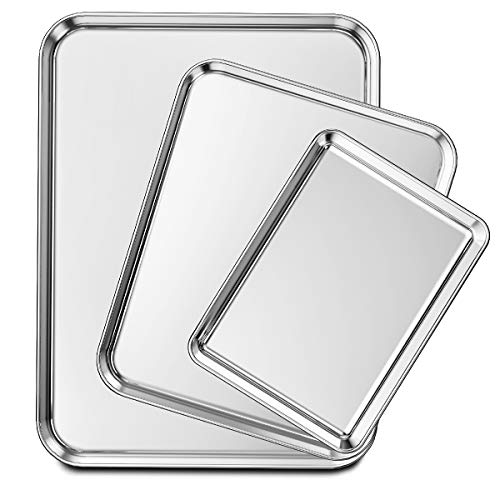
3. Wildone Baking Sheet Set of 3, Stainless Steel Cookie Sheet Cooking Sheet Pan for Baking & Roasting, 9/12/16 Inch, Non Toxic & Heavy Duty & Easy Clean
Amazon Rating: 4.5 stars out of 5.0 (3,441 ratings)
If you want to replace coated aluminum pans with simple stainless, this Wildone set is a nice budget‑friendly upgrade. You get three sizes that cover everything from toaster‑oven cookies to full sheet‑pan dinners.
Why I like it
- Made from stainless steel with no chemical nonstick coating, so there’s no PFAS, PTFE, or “advanced fluoropolymer” layer to chip or flake.
- Set includes three rimmed pans (about 15.8″ x 12″, 12.25″ x 9.65″, and 9.37″ x 7″), which covers most roasting and baking needs, plus toaster‑oven use.
- Marketed as a direct replacement for aluminum sheet pans: thick‑gauge construction, mirror finish to reduce sticking, rolled edges, and deep sides to keep juices contained.
- Many reviewers call out that they feel sturdy, resist warping, and are easy to clean, especially if you use parchment for cookies and sticky foods.
Things to keep in mind
- Like any uncoated stainless, they’re not truly nonstick; I still recommend unbleached parchment for cookies and very sticky items.
- Max rated to about 450 °F, which is fine for most baking but worth noting if you routinely roast at very high heat.
Best for: Everyday cookies, roasted veggies, and sheet‑pan meals when you want an affordable, PFAS‑free stainless steel set to replace aging coated or aluminum pans.
4. Lodge Seasoned Cast Iron Skillet – PFAS-Free, Non-Toxic Cookware – Use with an Oven, Stove, Grill, or Campfire – Naturally Non-Stick & Oven Safe – 6.5 Inches

Amazon Rating: 4.6 stars out of 5.0 (163,334 ratings)
If you want truly coating‑free, PFAS‑free “forever” bakeware, a small cast iron skillet like this Lodge is hard to beat. It’s just iron and oil, which means no synthetic nonstick layer to chip or off‑gas.
Why I like it
- Made from bare cast iron and preseasoned with 100% vegetable oil—no PTFE, PFOA, or other PFAS‑based coatings.
- Naturally nonstick surface that improves as you build seasoning, giving you easy release for cornbread, skillet cookies, cobblers, and small crisps.
- Oven‑ and broiler‑safe, with excellent heat retention and even heating for high‑heat baking and roasting.
- Made in the USA and designed to last for decades with basic care.
Things to keep in mind
- Requires seasoning and a bit of maintenance: hand‑wash, dry thoroughly, and rub with a thin layer of oil after use.
- Cast iron can leach small amounts of iron into food, which is usually fine (and sometimes beneficial) but worth noting for people who need to limit iron.
Best for: Cornbread, skillet cookies, fruit crisps, and small cobblers when you want high‑heat performance and a truly PFAS‑free pan with no synthetic coating at all.
5. MORA Ceramic Pie Pan for Baking – 9 inch – Deep and Fluted Pie Dish for Old Fashion Apple Pie, Quiche, Pot Pies, Tart, etc – Modern Farmhouse Style Porcelain Ceramic Pie Plate – Vanilla White

Amazon Rating: 4.9 stars out of 5.0 (1,218 ratings)
If you want a true ceramic pie dish with no nonstick coating or metal core, this Mora pan checks a lot of boxes. It’s a deep, fluted porcelain pie plate that’s designed for tall fillings and pretty crimped crusts.
Why I like it
- Made from Mora’s proprietary Paladin porcelain clay with in‑house glazes, so you’re dealing with a single, fully ceramic piece rather than a metal pan with a ceramic coating.
- Mora states that their clay and glazes are free of heavy metals and PFOAs (PFAS used in some nonstick coatings), and that products meet both FDA and California Prop 65 safety standards for lead and cadmium.
- Oven‑safe up to typical home‑oven temps (about 500 °F) and also microwave, dishwasher, and freezer safe, as long as you avoid sudden temperature shocks.
- Deep‑dish design with a fluted edge makes it great for old‑fashioned apple pie, quiche, pot pies, and other tall bakes, and it looks nice enough to go straight to the table.
Things to keep in mind
- Like other ceramics, it’s not broiler‑safe and shouldn’t go straight from freezer to a hot oven; I’d mirror your glass section’s guidance on thermal shock.
- Glazed ceramic is generally easy to clean, but a light buttering and maybe a dusting of flour for very sticky fillings can help with release.
Best for: Classic fruit pies, quiche, and pot pies when you want a fully ceramic, PFAS‑free, heavy‑metal‑tested dish that doubles as a serving piece.
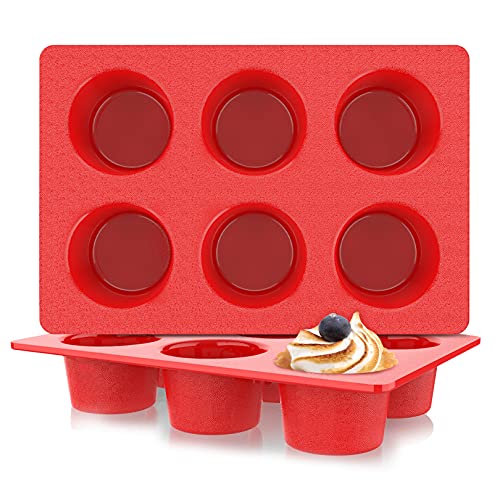
6. Jumbo Muffin Pan Silicone, European LFGB Cupcake Pan 6 Cups, Non-Stick Deep Cupcake Baking Pan, Silicone Large Muffin Molds, Muffin Tins BPA Free, Set of 2 Red
Amazon Rating: 4.4 stars out of 5.0 (640 ratings)
If you like silicone for easy muffin release but worry about fillers, this Aokinle pan is a good example of what I look for: LFGB‑tested, BPA‑free silicone with no extra coating.
Why I like it
- Made from European LFGB‑certified, food‑grade silicone, which is a stricter standard than basic “FDA food‑grade” and focuses on how much can actually migrate into food.
- BPA‑free, flexible silicone that doesn’t turn white with the “pinch test,” a sign you’re not dealing with chalky fillers that can affect performance and durability.
- Set of two 6‑cup jumbo pans (about 2.75″ cup diameter, 1.97″ deep), great for oversized muffins, egg bites, and mini quiches.
- Oven, microwave, freezer, and dishwasher safe, with a temperature range roughly from about ‑40 °F to 446 °F.
Things to keep in mind
- As with any silicone, I keep it below its max rated temperature and still lean on glass, ceramic, and stainless for my highest‑heat baking.
- For very wet batters, it can help to place the flexible pans on a baking sheet to keep them stable going in and out of the oven.
FAQ
What is the healthiest bakeware to use?
When people ask me what’s “healthiest,” I steer them toward the simplest, most inert materials: glass, fully glazed ceramic or stoneware, stainless steel, and cast iron. Used as intended, these don’t rely on PFAS‑based nonstick coatings and have very low leaching compared with traditional nonstick or bare aluminum.
What is the least toxic pan to cook with?
If we’re talking purely from a chemistry standpoint, a clear glass baking dish or a fully vitrified, heavy‑metal‑tested ceramic dish is about as low‑risk as it gets. There’s no coating to wear off, no reactive metal, and very little in contact with your food besides silica‑based glass or glaze. Seasoned cast iron and uncoated stainless steel are also excellent choices, especially if you line stainless with parchment for stickier bakes.
What is the safest material to use for baking?
For everyday baking, my short list looks like this:
- Glass (borosilicate or tempered soda‑lime)
- Fully glazed ceramic/porcelain/stoneware from brands that test for lead and cadmium
- Uncoated stainless steel (304 / 18‑8 / 18‑10)
- Bare cast iron or carbon steel
These materials are widely considered safe when you avoid obvious pitfalls like thermal shock with glass/ceramic or long, high‑heat bakes of very acidic foods on bare reactive metals.
Does baking with silicone release toxins?
Silicone is one of those “it depends” materials. High‑quality, food‑grade silicone that meets FDA or LFGB standards generally performs well in safety testing and doesn’t melt or off‑gas at normal baking temperatures.
New research does show that some silicone pans can release small amounts of siloxanes into food, especially on the first few uses, with levels dropping after a couple of bakes.
Personally, I stick to LFGB‑certified silicone for things like muffin cups or baking mats, keep it below its max temperature, and still lean on glass, ceramic, and stainless as my main workhorses.
Is Pyrex glass toxic‑free?
For clear, undecorated Pyrex baking dishes, I’m not worried about chemical exposure. The glass itself is free from BPA and, in modern pieces, does not use lead as a glass ingredient.
The bigger concern with Pyrex is breakage, not toxicity, avoiding big temperature swings (like freezer‑to‑hot‑oven) to prevent shattering.
I’d be more cautious with older, decorated vintage pieces, where painted designs may contain lead.
Read Next
Top 5 Best Stainless Steel Baking Sheets
The Best Water Filters of 2026 (from a Scientist)
Top 10 Best Non Toxic Cutting Boards
Top 5 Best Filtered Water Bottles
Top 5 Best Water Filter Pitchers

Top 5 Best Non Toxic Hand Soaps
Top 7 Best Non Toxic Body Washes

Top 10 Best Non Toxic Laundry Detergents
Top 5 Best Non Toxic Dishwashing Detergents
Top 5 Best Non Toxic Dishwashing Tablets & Pods
What is FD&C Red 40 Made of and its Side Effects?
What Is Yellow 5 (Tartrazine) and is it Bad for You?
What Is FD&C Blue 1 and is it Bad for You?
What are Parabens & Why are They Bad? From a Scientist
PFAS: Meaning, Definition, and How to Avoid
What are Phthalates? Pronunciation and Definition

What is Fragrance Made of? Ingredients List & Health Risks