Derek Ma, MSc
Working in environmental science and water quality has completely ruined my ability to “just trust” tap water. Because of what I have seen in lab reports—PFAS, trace heavy metals, disinfection byproducts, and microplastics—I genuinely have a hard time drinking water in someone’s home unless it has at least gone through a decent water filter pitcher.
Water filter pitchers are one of the simplest ways to cut PFAS, heavy metals, and microplastics at home without installing a full system, especially when you choose models that are independently tested to NSF/ANSI‑type standards.
In this article, I’ll break down what to look for in a non toxic water filter pitcher and share my top five best options that make the most sense from both a health and practicality standpoint.
Benefits of Water Filter Pitchers
Water filter pitchers are a low‑barrier way to upgrade your tap because they sit on the counter or fridge, need no plumbing, and can meaningfully reduce PFAS in drinking water, lead, and other contaminants depending on the cartridge design.
They also help you avoid the cost and microplastic load of bottled water, which is often less regulated than municipal tap.
- Ongoing savings and less plastic waste compared with single‑use bottled water, especially if you drink several glasses per day.
- Convenient, no‑install filtration that works in rentals, dorms, or small apartments.
- Potential for broad contaminant reduction (PFAS, fluoride, heavy metals, etc.) when using advanced filters instead of basic taste‑only pitchers.
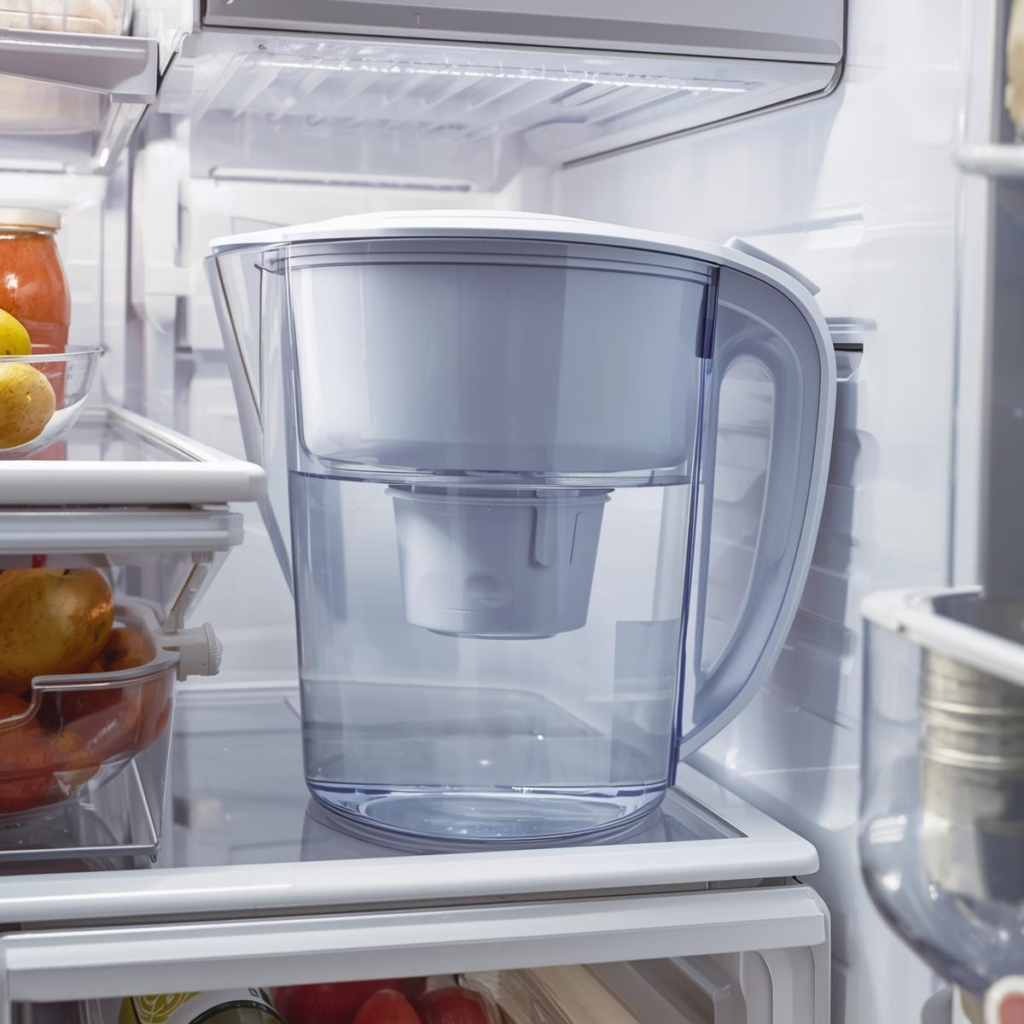
What to look for in a water filter pitcher
Choosing a pitcher is less about brand name and more about what the filter is actually proven to do and what the plastics are made of.
| Feature to check | What it means in practice | Why it matters for health/safety |
| Filter certifications | Look for NSF/ANSI 42, 53, 401, and where applicable P473 for PFAS; check if claims are certified or only “tested to” those standards. | Confirms reduction of chlorine, lead and other metals, “emerging contaminants,” and sometimes PFAS instead of vague marketing claims. |
| Contaminants reduced | Brand should publish a contaminant list and performance data (PFAS, fluoride, lead, chromium‑6, microplastics, etc.). | Lets you match the pitcher to your real tap‑water risks (e.g., PFAS vs just chlorine taste). |
| Filter life & capacity | Typical gravity pitchers range from ~40–150 gallons per filter; some high‑end units reach 100+ gallons with slower flow. | Affects yearly cost and how often you remember to change the filter before performance drops. |
| Pitcher material | Most advanced units use BPA/BPS‑free Tritan or similar medical‑grade plastics; stainless gravity systems are an upgrade if you want minimal plastic contact. | Reduces exposure to plasticizers and other leachables, especially if you store water in the fridge daily. |
| PFAS & microplastics claims | Check for explicit PFAS and microplastic reduction in test reports, not just on the box. | PFAS and microplastics are not addressed by many standard carbon pitchers, so this is key if they’re your main concern. |
| Flow rate & usability | High‑performance filters are often slower; look for honest timing estimates and reservoir size. | If the pitcher is painfully slow or heavy, people in the household are less likely to use it consistently. |
| Brand transparency | Access to full lab reports, test protocols, and explanation of any discrepancies or limitations. | Helps you distinguish evidence‑based filtration from over‑promising or cherry‑picked results. |
You can learn more about what these various NSF/ANSI certifications mean in my water filter recommendation article: Best Water Filters of 2026.
Best water filter pitcher recommendations from a scientist
Below are my top 5 best options, categorized by use case and focusing on both filtration and non‑toxic materials.
1. Best Overall: Clearly Filtered Clean Water Pitcher

Removes up to 99.99% of 365+ contaminants, including PFAS, fluoride, lead, arsenic, microplastics, and hundreds of organic chemicals, while leaving beneficial minerals.
Independently tested to comply with NSF/ANSI 42, 53, 401, and 473–type standards, with detailed third‑party lab data available online.
Pitcher material: BPA/BPS‑free, medical‑grade Tritan plastic (no estrogenic or androgenic activity).
Filter life: Up to ~100 gallons per filter, which is longer than many basic carbon pitchers.
Best for: Households that want maximum contaminant reduction for city tap, especially PFAS, microplastics, and heavy metals, without installing an under‑sink system.
2. Best PFAS & fluoride focus: Epic Pure Water Filter Pitcher

Uses a dense carbon‑block filter with sub‑micron filtration to reduce PFAS, fluoride, lead, heavy metals, pesticides, microplastics, and trace pharmaceuticals.
Tested to NSF/ANSI 42, 53, 401, and P473 standards, with independent lab data showing strong PFAS and fluoride reduction.
Pitcher material: BPA/BPS‑free medical‑grade Tritan; filters made from BPA/BPS‑free polypropylene.
Filter life: Around 150 gallons per filter, depending on water quality and usage.
Best for: People prioritizing PFAS and fluoride reduction who still want a standard‑looking, fridge‑friendly pitcher with strong third‑party test data.
3. Best Budget Water Filter Pitcher: Brita Water Filter Pitcher

Brita’s Elite filter is NSF/ANSI 42 and 53 certified to reduce chlorine taste and odor plus contaminants like lead, mercury, and cadmium, and it fits many of Brita’s popular 10‑cup style pitchers.
Widely available, lower upfront cost, and easy to find replacement cartridges at grocery and big‑box stores.
Pitcher material: BPA‑free plastic across most modern Brita pitchers.
Filter life: Up to 120 gallons for the Elite filter, which extends replacement intervals compared with basic Brita cartridges.
Best for: Upgrading from plain tap on a budget when your main concerns are chlorine taste/odor and some metals rather than full‑spectrum PFAS or microplastic removal.
4. Best for TDS: ZeroWater Pitcher

Uses a 5‑stage ion‑exchange system that can drop total dissolved solids close to zero, which many users notice as a very “pure” taste.
ZeroWater pitchers are certified to NSF standards (NSF/ANSI 42 and 53) for lead, chlorine, and PFAS reduction, making them more than just a taste filter when paired with the right cartridge.
Pitcher material: BPA‑free plastic in most standard jugs.
Filter life: Shorter when source water has high TDS, so cartridges may need more frequent replacement than carbon‑only designs.
Best for: People who care a lot about taste and TDS readings and are comfortable with more frequent filter changes for that “lab‑like” water profile.
5. Best hot/cold countertop Reverse Osmosis “pitcher alternative”: Water C5 Countertop RO

The VonWater C5 is a plug‑in countertop reverse osmosis system with integrated hot and cold dispensing and a built‑in storage tank, so you get RO‑level contaminant reduction without plumbing or under‑sink installation.
Its 7‑stage filtration (including RO membrane, carbon, and polishing stages) is tested against NSF/ANSI 42, 58, and 372 standards, targeting chlorine, taste/odor, dissolved solids, and common metals while using lead‑free materials.
Capacity & use: Functions like a high‑end “electric pitcher” you set on the counter, with multiple temperature presets for instant hot and chilled filtered water instead of manually filling and waiting for a gravity pitcher.
Best for: Apartments, offices, or households that want a no‑install RO system with on‑demand hot and cold water and are okay with a powered countertop unit instead of a traditional pitcher.
FAQ
Do water filter pitchers remove PFAS?
Some advanced pitchers, including models from Clearly Filtered and Epic Pure, are tested to reduce PFAS like PFOA and PFOS, often under NSF/ANSI P473‑type protocols.
Many standard carbon pitchers (including some popular mainstream brands) do not claim PFAS reduction, so it is important to verify this in the test data before relying on a pitcher for PFAS.
Do water filter pitchers remove microplastics?
High‑performance cartridges with sub‑micron filtration and long contact paths, such as Clearly Filtered’s affinity media, can significantly reduce microplastic particles in lab testing.
Basic taste‑and‑odor carbon filters may capture some larger particles but are not usually tested or marketed specifically for microplastic removal.
Is a water filter pitcher enough, or do I need a full system?
For many city households, a robust pitcher is a practical starting point or backup for drinking and cooking water, especially when combined with non‑toxic bottles for on‑the‑go use.
If your water has serious contamination issues or you want whole‑home coverage, a certified under‑sink or reverse‑osmosis system plus a good pitcher for redundancy offers more comprehensive protection.
Is bottled water or tap water better?
In the U.S., tap water is regulated by the EPA under the Safe Drinking Water Act, with utilities required to test routinely and publish annual Consumer Confidence Reports that disclose contaminant levels to the public.
Bottled water is regulated by the FDA as a packaged food; by law its contaminant limits must be “no less stringent” than EPA’s, but oversight and transparency are weaker, and a large share of bottled water is effectively repackaged tap that does not have to publish the same style of detailed water‑quality reports (1).
Read Next
Top 4 Best Reverse Osmosis Water Filters
Top 5 Best Filtered Water Bottles
The Best Water Filters of 2026 (from a Scientist)
The Truth About Microplastics in Bottled Water
Top 5 Best Gravity Fed Water Filter Systems
Top 5 Best Non Toxic Dishwashing Detergents
Top 10 Best Non Toxic Cutting Boards

Top 5 Best Stainless Steel Baking Sheets

Top 10 Best Non Toxic Laundry Detergents
Top 5 Best Non Toxic Hand Soaps
Top 7 Best Non Toxic Body Washes


Top 5 Best Non Toxic Dishwashing Tablets & Pods
What is FD&C Red 40 Made of and its Side Effects?
What Is Yellow 5 (Tartrazine) and is it Bad for You?
What Is FD&C Blue 1 and is it Bad for You?
What are Parabens & Why are They Bad? From a Scientist

PFAS: Meaning, Definition, and How to Avoid
What are Phthalates? Pronunciation and Definition

What is Fragrance Made of? Ingredients List & Health Risks