Derek Ma, MSc

When you’re like me and work every day in an environmental laboratory testing both drinking water and wastewater, you start to see what actually shows up in our water and the critical importance of water filters. My professional experience lets me look at water purifiers with a more critical eye, so I can focus on which ones truly help with real‑world contaminants.
So based on my own research, here are what I believe to be the best water filters available in the market today.
This article will cover the following categories of water filters:
- Best Reverse Osmosis Water Filter
- Best Gravity Fed Water Filter
- Best Water Filter Pitcher
- Best Water Filter for Home (Under Sink)
- Best Filtered Water Bottle
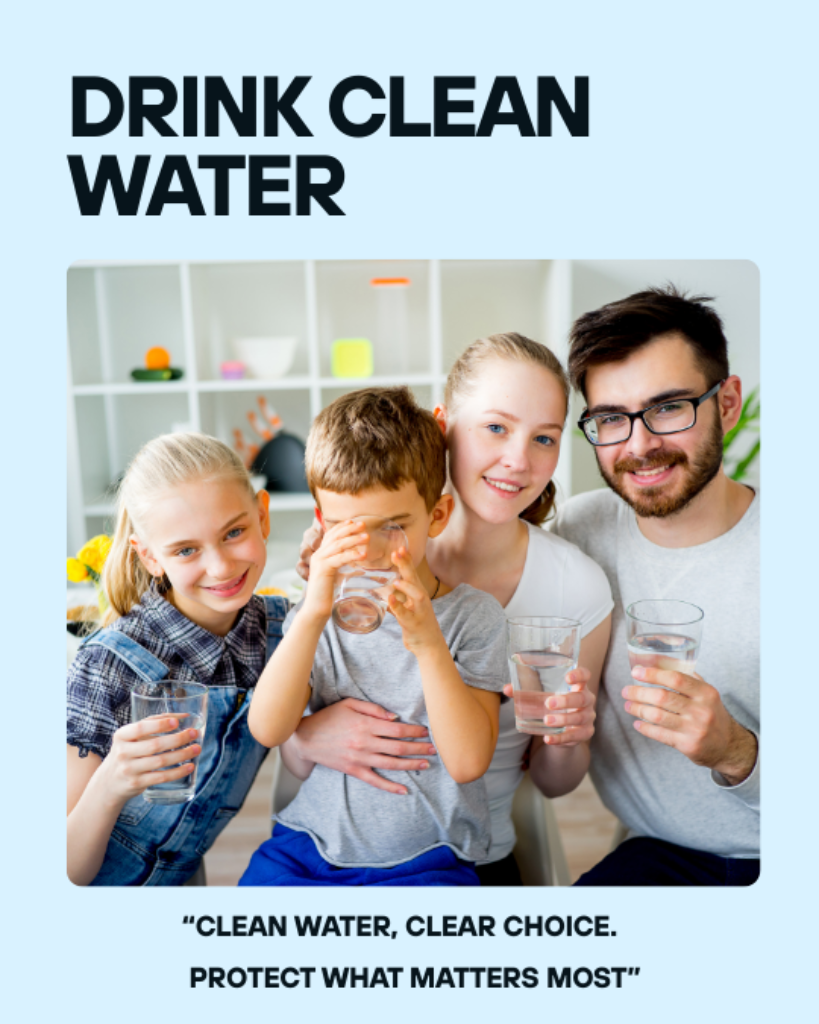
Tap water can contain microbes, disinfection byproducts, heavy metals like lead and arsenic, nitrates, and PFAS “forever chemicals”, all linked to problems ranging from gastrointestinal illness to cancer and developmental effects (2).
A high‑quality water purifier acts as your last line of defense between whatever is in the pipes and what reaches your glass.
U.S. adults are estimated to drink about 44 ounces of plain water per day, which is roughly 1.3 liters per person (4).
Instead of hoping the system catches every problem, you actively upgrade your family’s protection—and that peace of mind is often worth far more than the cost of the water filter itself (1).
Why Upgrade Your Water Filter
Municipal and well water can contain chlorine byproducts, microplastics, heavy metals, and PFAS “forever chemicals” that standard carbon pitchers barely touch.
High‑performance filters use technologies like reverse osmosis, advanced carbon, UV disinfection, and specialty resins to target these health‑relevant contaminants more effectively.
| Technology | How it Works (Simple) | Best At Removing |
| Reverse Osmosis | Pushes water through a semi‑permeable membrane that blocks most dissolved solids. | PFAS, heavy metals, nitrates, fluoride, many salts and microplastics. |
| Advanced Carbon | Uses highly porous carbon to adsorb chemicals onto its surface. | Chlorine, disinfection byproducts, many organic chemicals, some PFAS. |
| Specialty Resins | Uses ion‑exchange or selective media to swap or bind specific ions/chemicals. | Lead, hardness (calcium/magnesium), select metals and nitrates. |
| UV Disinfection | Uses ultraviolet light to damage microbial DNA/RNA so they cannot reproduce. | Bacteria, viruses, and protozoa in clear water. |
Certifications That Actually Matter
NSF/ANSI
NSF/ANSI certifications tell you what a filter is actually proven to do, not just what the marketing says.
It is the gold standard for verifying real-world performance.
The table below highlights the most important drinking water standards to look for on countertop and under‑sink systems.
NSF/ANSI is reputable because it is an independent, third‑party system built around strict, consensus‑based public health standards rather than manufacturer claims (3).
Products are tested in accredited labs against EPA‑linked contaminant limits, labels and marketing are audited for accuracy, and manufacturers receive ongoing inspections and periodic re‑testing instead of one‑time approvals
IAPMO
IAPMO R&T is one of the main third‑party labs that tests and certifies drinking water filters to plumbing and water treatment standards, similar in role to NSF or WQA.
When a filter claims IAPMO certification, it means an independent accredited lab has verified that the product meets the specified standard(s) under controlled test conditions, rather than just relying on the manufacturer’s internal data (5).
| Standard | Main Focus | Typical Contaminants Covered (Examples) |
| NSF/ANSI 42 | Aesthetic effects | Chlorine, taste/odor, some particulates, sometimes chloramine. |
| NSF/ANSI 53 | Health effects | Lead, cysts, VOCs, asbestos, mercury; sometimes arsenic and chromium‑6. |
| NSF/ANSI 58 | Reverse osmosis performance | TDS, fluoride, nitrate/nitrite, arsenic, chromium‑6, lead, some PFAS when listed. |
| NSF/ANSI 401 | “Emerging” contaminants | Selected pharmaceuticals, pesticides, herbicides, BPA, other trace chemicals. |
| NSF/ANSI 55 | UV microbial treatment | Bacteria and viruses in visually clear water (Class A or B UV). |
| NSF/ANSI P231 | Microbiological purifier level | Bacteria, viruses, protozoan cysts from unsafe water sources. |
| NSF/ANSI 244 | Backup microbial protection | Incidental microbial contamination in otherwise treated public water. |
| NSF/ANSI 372 | Low‑lead materials | Verifies “lead‑free” construction of wetted components (materials safety). |
When comparing brands, always look for specific standards and contaminants listed, not just vague “filters 100+ contaminants” marketing language.
What To Look For in a Safer Water Filter
When choosing a water filter, it helps to define your priorities first (PFAS vs. lead vs. taste, countertop vs. whole‑house).
Certifications and independent testing should drive the decision more than TDS meters or taste alone. Here are key criteria:
- Target contaminants: PFAS, lead, chromium‑6, arsenic, nitrates, disinfection byproducts, pharmaceuticals, microplastics.
- Certifications/testing: NSF/ANSI 42, 53, 401, and P473 or updated 53 PFAS claims where relevant; transparent third‑party lab reports are a major plus.
- Filter type and install: Countertop RO, gravity systems, pitchers, under‑sink units, and whole‑house systems each suit different living situations and budgets.
- Maintenance and cost: Filter life, replacement cost, and electricity/waste‑water needs (for RO) determine long‑term affordability.
Best Reverse Osmosis Water Filter: AquaTru

Certified to remove 84 contaminants (IAPMO to NSF / ANSI)
AquaTru is a plug‑in countertop reverse osmosis purifier that uses four‑stage filtration (sediment, carbon, RO membrane, and a final carbon polishing filter) to reduce a wide range of contaminants, including lead, chromium‑6, arsenic, nitrates, fluoride, and microplastics.
- Stages 1 & 2 – Dual Pre/Carbon Filter
- Mechanical pre‑filter catches sand, silt, rust, and other particles.
- Activated carbon reduces chlorine, improves taste, and protects the RO membrane.
- Stage 3 – Reverse Osmosis Membrane
- Ultra‑fine membrane removes most dissolved contaminants down to about 0.0001 microns (like heavy metals, many PFAS, nitrates, and other dissolved solids).
- Stage 4 – VOC Carbon Polishing Filter
- High‑quality carbon targets volatile organic compounds (VOCs) and polishes the water for final taste and odor improvement.
AquaTru does need electricity and produces a waste‑water stream typical of RO systems. Daily production capacity is on the order of dozens of gallons per day (spec sheets list about 54 gallons), which is more than enough for household drinking and cooking water.
AquaTru filter lifespans
| Model / Filter | Time limit | Volume limit |
| Standard AquaTru Pre‑Filter | 6 months | 600 gallons |
| Standard AquaTru RO Filter | 2 years | 1,200 gallons |
| Standard AquaTru VOC Filter | 1 year | 600 gallons |
| Standard AquaTru pH + Mineral Boost VOC | 1 year | 600 gallons |
| AquaTru Carafe Pre‑Filter | 6 months | 300 gallons |
| AquaTru Carafe RO Filter | 2 years | 600 gallons |
| AquaTru Carafe VOC Carbon Filter | 1 year | 300 gallons |
Best Gravity Fed Water Filter: Berkey

Berkey gravity systems use Black Berkey elements (high‑grade activated carbon plus proprietary media) to reduce heavy metals, disinfection byproducts, and many organic contaminants, while leaving beneficial minerals in the water.
How does a Gravity Fed Water Filter Work?
1. Gravity flow
Water is poured into the upper stainless‑steel chamber, where it begins to flow downward through the Black Berkey filter elements.
2. Microfiltration
As water passes through the elements’ tiny pores, sediment, rust, bacteria, protozoa, parasites, and many microplastics are physically trapped.
3. Chemical adsorption
Activated carbon and other filter media grab onto chemicals such as chlorine byproducts, many pesticides, some pharmaceuticals, and heavy metals like lead, holding them on the media surface.
4. Clean water collection
The treated water exits the elements into the lower chamber, where it is stored and dispensed through the spigot as filtered drinking water.
Because the system is gravity‑fed instead of pressurized, water moves slowly through this “tortuous path,” which gives contaminants more contact time with the media and improves removal efficiency.
Unlike reverse osmosis, Berkey typically leaves beneficial minerals like calcium and magnesium in the water, so the taste and TDS (total dissolved solids) remain closer to the original source while many harmful contaminants are significantly reduced.
Third‑party and EPA‑accredited lab testing indicates the elements can reduce lead and certain compounds by up to about 99.9%, which has made Berkey a popular off‑grid and emergency option (7).
Unlike RO, Berkey does not rely on electricity or water pressure; water moves through the elements by gravity, which is ideal for power outages, rural wells, and camping.
| Element type | Main filter media | Key contaminant scope (simplified) | Rated lifespan |
| Black Berkey Purification Elements | Proprietary carbonized coconut shell blend | Reduces contaminants down to virus level (plus bacteria, cysts, chemicals) | 6,000 gallons per pair of elements |
| Berkey Earth Filtration Elements | Diatomaceous earth–based media | Reduces similar contaminants as Black Berkey but does not remove viruses | 3,000 gallons per element or 3 years (whichever comes first) |
| Super Sterasyl Ceramic Elements | Ceramic elements (British Berkefeld) | Tested to reduce bacteria, cysts, and chlorine | 535 gallons per element |
Best Berkey Alternative Gravity Fed Water Filter: Culligan (MaxClear)
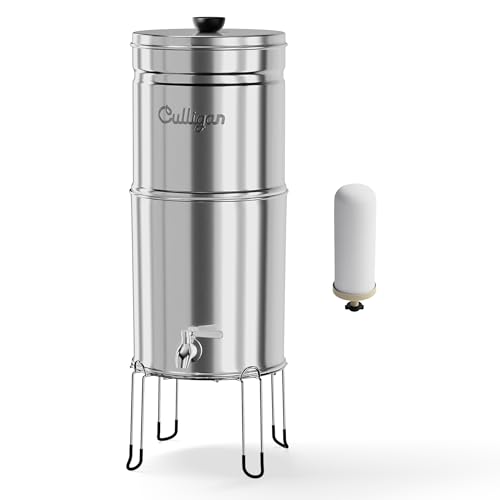
Culligan’s MaxClear gravity systems combine ceramic and activated carbon media to reduce lead and total measured PFAS by up to about 99%, according to internal testing.
This filter has been certified by IAPMO against NSF/ANSI standards 42, 53, 401 (10).
This places them in a similar performance category to gravity systems like Berkey, but using a different filter formulation that emphasizes PFAS claims.
Like other gravity filters, MaxClear requires no electricity and can sit on a countertop, making it suitable for renters or as an emergency backup.
For households prioritizing PFAS and lead reduction without going to RO, MaxClear gravity systems offer a compelling alternative.
MaxClear filters are recommended to be changed every 6 months.
Best Performance Water Filter Pitcher: Clearly Filtered

Clearly Filtered’s Affinity filtration technology in its pitcher is engineered to target hundreds of contaminants (8), including fluoride, chlorine, lead, arsenic, and PFAS.
Component‑level NSF/ANSI testing covers standards 42, 53, 401, and 473, and the company publishes detailed lab data, which is unusually transparent for a pitcher brand.
Gravity flow through a packed filter:
Tap water is poured into the top reservoir and gravity pulls it down through the filter into the bottom of the pitcher. The cartridge is tightly packed, so water has to follow a long, twisting path rather than dropping straight through, which increases contact time with the media.
Multi‑layer Affinity filtration:
The filter combines several different filtration medias and a physical barrier. Larger particles are blocked up front, while a proprietary blend of absorbent materials uses ionic adsorption to grab contaminants like fluoride, chlorine, PFAS, lead, arsenic, and many other chemicals as water moves through.
Clean water, minerals retained:
By the time water reaches the bottom, most targeted contaminants are trapped in the filter, but beneficial minerals like calcium and magnesium are left in the water, so it still tastes natural.
Independent lab testing to NSF‑type standards shows reduction of hundreds of contaminants, which is why this pitcher is often considered a “mini advanced filter.”
Because it works like a standard pitcher, Clearly Filtered is easy to use in dorms, offices, and rentals, but offers significantly broader contaminant coverage than basic carbon pitchers that only address taste and odor.
It is especially attractive if PFAS and lead are priorities but you are not ready to install an under‑sink or RO system.
Pitcher filter replacement table
| Fills of 0.5‑gal top reservoir per day | Days until 100 gallons reached | Approximate replacement interval |
| 1 fill/day | 200 days | 6 months (time limit reached first) |
| 2 fills/day | 100 days | About 3 months |
| 3 fills/day | ~67 days | About 2 months |
| 4 fills/day | 50 days | About 50 days |
| 5 fills/day | 40 days | About 40 days |
| 6 fills/day | ~33 days | About 33 days |
Once the filter has been wetted, it should be replaced after 6 months at the latest, even if you have not reached 100 gallons.
Best Budget Water Filter Pitcher: Epic Pure
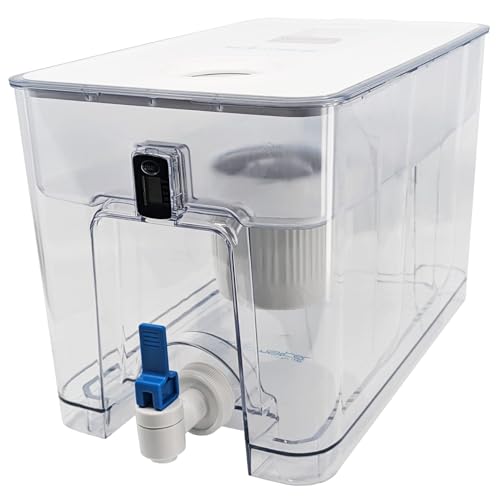
Epic Pure is another advanced pitcher system that uses a dense carbon block and specialty media to reduce chlorine, lead, pharmaceuticals, and PFAS
This filter has been certified by IAPMO against NSF/ANSI standards 42, 53, 401 (9).
The brand makes test data available online, which gives more confidence than generic claims about “hundreds of contaminants.”
Compared with Clearly Filtered, Epic Pure is often more budget‑friendly while still offering strong performance against many health‑relevant contaminants, making it a solid choice for cost‑conscious households.
Filter life and replacement cost are important to factor in, as dense blocks can clog faster in very turbid or sediment‑rich water.
Bottle and pitcher filter recommendations
| Product | Rated capacity | Typical time-based recommendation |
| Bottle filter | 150 gallons | Replace every 3–4 months |
| Pitcher filter (general recommendation) | 150 gallons | Replace every 3–4 months |
| Pitcher filter at 2 fills/day (0.5 gal each) | 150 gallons | About 150 days (~5 months) by volume |
Best Water Filter for Home (Under Sink): Aquasana
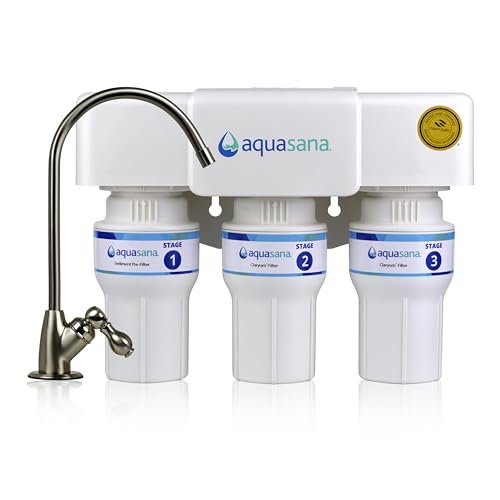
Aquasana is known for under‑sink, countertop, and whole‑house filters using multi‑stage carbon blocks and specialty media to reduce chlorine, VOCs, and heavy metals, with many models carrying NSF/ANSI certifications such as 42 and 53.
Certain under‑sink and RO lines are designed to target PFAS and pharmaceuticals as well, often backed by third‑party testing.
Whole‑house Aquasana systems focus more on chlorine, taste/odor, and sediment reduction at the point of entry, which improves shower and appliance water, while point‑of‑use filters (under‑sink or RO) handle the most sensitive drinking and cooking uses.
This layered approach works well for families who want both better shower/skin water and high‑purity drinking water at key taps.
Best Under Sink Reverse Osmosis Water Filter: Waterdrop

Waterdrop’s under‑sink RO systems (such as its G‑series) use high‑efficiency RO membranes and carbon blocks, with NSF/ANSI 53 certifications on some models that explicitly list PFOS and PFOA reduction.
This indicates the units can bring PFAS down to below EPA health advisory levels under tested conditions when filters are maintained.
These systems are tankless and relatively compact, providing faster flow and saving cabinet space while still delivering multi‑stage purification at a dedicated faucet.
For households that want RO‑level performance against PFAS, heavy metals, and many dissolved contaminants without a bulky tank, Waterdrop is a strong contender.
Best Filtered Water Bottle: LARQ

LARQ built its reputation on self‑cleaning bottles that use UV‑C light in the cap to inactivate bacteria and viruses inside the bottle, reducing odor and microbial growth.
More recently, the brand has offered filtration products such as pitchers that combine mechanical filtration with UV disinfection to target both chemical contaminants and microbes.
Because UV treats microorganisms rather than chemicals, LARQ products can work well for travelers or those concerned about microbial safety in addition to taste and odor, but they should be paired with a strong chemical filter when PFAS or heavy metals are a priority. Battery charging and lamp life are additional maintenance considerations compared with passive gravity or carbon systems.
See my other Best Filtered Water Bottle Recommendations here.
How often to replace water filters
Filter replacement depends on the type of system, how much water you use, and how dirty your source water is, but there are some good general rules of thumb.
Typical replacement timelines
- Pitchers (Epic, Clearly Filtered, etc.): About every 2–4 months or 40–150 gallons, whichever comes first (heavier use or very hard water shortens this).
- Countertop/under‑sink carbon blocks: Around every 6–12 months, often in the 300–600 gallon range.
- Reverse osmosis systems (AquaTru, Waterdrop): Pre/post carbon filters usually every 6–12 months; RO membrane about every 2–3 years under normal household use.
- Gravity systems (Berkey, MaxClear): Black carbon elements commonly last several years (up to a few thousand gallons), but must be replaced sooner if flow slows dramatically or taste changes.
How to Pick the Right System for You
Start by reviewing your local water quality report or well test results to see whether lead, PFAS, nitrates, or other contaminants are of greatest concern.
For the broadest coverage, a reverse osmosis system like AquaTru or Waterdrop plus a whole‑house carbon filter (such as Aquasana) is often the most protective setup.
If you want a simpler, no‑install solution, a high‑performance pitcher (Clearly Filtered or Epic Pure) or gravity system (Berkey or Culligan MaxClear) can dramatically improve drinking water safety with lower upfront complexity.
Travelers and those prioritizing microbial safety may add a LARQ UV bottle on top of a home filtration system for extra flexibility.
References
Culligan Water Filters NSF Certified
Safe Water and Your Health | National Institute of Environmental Health Sciences
NSF/ANSI/CAN 61 Testing and Certification | NSF
Fast Facts: Data on Water Consumption | Nutrition | CDC
Product Testing & Certification | IAPMO
How long do the filters last in AquaTru countertop purifiers? – Help Center
Organic-Test-Results-2012-2_1.pdf
Are Epic Filters NSF/ANSI certified?
Read Next
Top 4 Best Reverse Osmosis Water Filters
Top 5 Best Water Filter Pitchers

Top 5 Best Gravity Fed Water Filter Systems
Top 5 Best Filtered Water Bottles
The Truth About Microplastics in Bottled Water
Top 5 Best Non Toxic Dishwashing Detergents
Top 10 Best Non Toxic Cutting Boards

Top 5 Best Non Toxic Hand Soaps

Top 7 Best Non Toxic Body Washes


Top 10 Best Non Toxic Laundry Detergents
Top 5 Best Non Toxic Dishwashing Detergents
Top 5 Best Non Toxic Dishwashing Tablets & Pods
What is FD&C Red 40 Made of and its Side Effects?
What Is Yellow 5 (Tartrazine) and is it Bad for You?
What Is FD&C Blue 1 and is it Bad for You?
What are Parabens & Why are They Bad? From a Scientist

PFAS: Meaning, Definition, and How to Avoid
What are Phthalates? Pronunciation and Definition

What is Fragrance Made of? Ingredients List & Health Risks